You're all caught up—no notifications available.
Explore All Exams at KGS


All Exams
Explore All Exams at KGS

Khan Sir Courses
Geography I Polity I History | World Map I Indian Map I Economics I Biology

UPSC & State PSC
UPSC I BPSC I UP-PSC I MP-PSC

State Exams
UP I Bihar I MP | Rajasthan

NEET | JEE | CUET
NEET | JEE | CUET

Defence Exams
NDA I CDS I CAPF I AFCAT I SSB I Agniveer

Police Exams
UP SI | Bihar SI | Delhi Police | UP Constable

SSC Exams
CGL I CPO I CHSL I MTS I SSC GD I Delhi Police

Foundation Courses
Physics I Chemistry I Biology I History I Geography I Polity I NCERT I Math I English | Map I Reasoning

Railway Exams
RRB | RPF

Teaching Exams
TET | Teaching | UGC

Banking Exams
SBI | RBI | IBPS

Engineering Exams
Civil | Electrical | Mechanical
UGC NET
UGC NET/JRF
Current Affairs provides you with the best compilation of the Daily Current Affairs taking place across the globe: National, International, Sports, Science and Technology, Banking, Economy, Agreement, Appointments, Ranks, and Report and General Studies
World Intellectual Property Day
Context: Union Ministry of Commerce and Industry announced a three-year fee waiver on all intellectual property (IP) registrations related to sports during World Intellectual Property Day.
More on the News
• The waiver applies to trademarks, patents, copyrights, designs, traditional knowledge, and geographical indications, and aims to boost innovation, support stakeholders, and strengthen India’s sports ecosystem.
• The government will also provide facilitation support under existing schemes, encouraging innovators, students, and artisans to convert ideas into IP assets.
• The Ministry highlighted initiatives such as the Viksit Bharat Digital Matrix 2026 – Design Hackathon, promotion of GI-tagged Kashmir willow cricket bat, and development of sports manufacturing clusters in regions like Jammu & Kashmir and Meerut.

About World Intellectual Property Day
• Celebrated annually on April 26.
• In 2000, the member states of the World Intellectual Property Organization designated April 26, marking the entry into force of the WIPO Convention in 1970, as World Intellectual Property Day to promote greater public awareness and understanding of intellectual property (IP).
• It aims to increase awareness about the role of IP rights (patents, trademarks, copyrights, designs) in fostering innovation, creativity, and economic growth
• The 2026 theme is “IP and Sports: Ready, Set, Innovate”, highlighting how IP drives technological advancement, branding, and commercialization in sports globally.
India’s First Underground Coal Gasification (UCG)-Linked Coal Mine Agreements
Context: India has signed its first commercial coal mine agreements with embedded provisions for Underground Coal Gasification (UCG), marking a major shift in coal utilisation strategy.
More on the News
• Under the 14th round of commercial coal auctions, the Ministry of Coal executed CMDPAs for four mines, with Reliance Industries Limited securing Recherla and Chintalpudi Sector A1, and Axis Energy Ventures India Private Limited winning Dip Extension of Belpahar and Tangardihi East.
• Located in Andhra Pradesh and Odisha, these mines include both fully and partially explored blocks and are the first to integrate UCG provisions in India’s commercial coal mining programme.
• With these additions, total CMDPAs reach 138 mines (331.544 MTPA), expected to generate ₹42,980 crore annually, attract ₹48,231 crore investment, and create about 4.34 lakh jobs.
About Underground Coal Gasification (UCG)
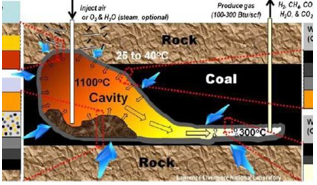
• UCG, also called in-situ coal gasification, is a process that converts coal into combustible syngas (methane (CH4), carbon dioxide (CO2), hydrogen (H2), and carbon monoxide (CO)) directly within underground coal seams.
• First proposed by William Siemens, it eliminates the need for conventional mining.
• Basic Process:
1. Pyrolysis: Coal → char + hydrocarbons
2. Gasification: Char reacts with gases to produce syngas
• Key Features & Advantages:
• Applications of UCG Syngas:
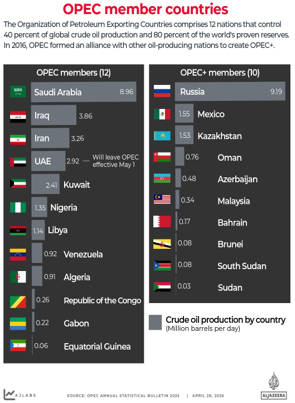
UAE leaves OPEC and OPEC+
Context: The Organization of the Petroleum Exporting Countries (OPEC) is set to lose a long-standing member as the United Arab Emirates announces its exit after nearly six decades.
More on the News
• The UAE has decided to quit both OPEC and OPEC+ from May 2026, citing the need for greater flexibility to pursue its national energy strategy and expand production capacity.
• The move comes amid heightened global energy disruptions linked to the US-Israel war with Iran, which has pushed oil prices sharply upward and strained supply routes like the Strait of Hormuz.
About OPEC (Organization of the Petroleum Exporting Countries)
• Founded on 14 September 1960 in Baghdad by Iran, Iraq, Kuwait, Saudi Arabia, and Venezuela.
• Headquarters: Vienna, Austria (shifted from Geneva in 1965).
• Created to counter the dominance of Western oil companies (“Seven Sisters”) and assert sovereignty over natural resources.
• Objectives:
• Functioning:
• Membership (before UAE exit): 12 members including Saudi Arabia, Iran, Iraq, Kuwait, Venezuela, Libya, Algeria, Nigeria, Gabon, Equatorial Guinea, Congo, and UAE.
OPEC+ (Expanded Oil Alliance)
• Created in 2016 through the “Declaration of Cooperation.”
• Nature: Not a formal organisation, but a broader alliance of OPEC + non-OPEC producers.
• Key Members: Includes major producers like Russia, Kazakhstan, and Azerbaijan.
• Purpose:
• Evolution:
17th Petersberg Climate Dialogue
Context: Ahead of COP31, the 17th Petersberg Climate Dialogue was held in Berlin, amid global energy disruptions linked to the US–Israel war against Iran and rising geopolitical tensions.
About the 17th Petersberg Climate Dialogue
• Hosted by Germany in cooperation with COP31 Presidency of Türkiye and negotiations partner Australia.
• An annual informal ministerial platform (since 2010) under the United Nations Framework Convention on Climate Change to enable candid political discussions outside formal negotiations and prepare ground for COP decisions.
• Around 400 participants from ~40 countries, including ministers, civil society, scientific community, financial institutions, and industry stakeholders.
• Core Focus Areas (2026):
• Key Discussion Highlights:
• Supported by the UNFCCC process, the Dialogue helps build momentum ahead of Bonn intersessional talks and COP31 negotiations.
Significance
• Critical Pre-COP31 Agenda Setting: Shapes negotiation priorities, builds political alliances, and identifies convergence areas before formal COP31 discussions.
• Operationalising the Paris Agreement: Moves focus from long-term targets to implementation pathways (2035 horizon), including sectoral transitions and electrification.
• Energy Security–Climate Convergence: Demonstrates how geopolitical crises (e.g., Strait of Hormuz disruptions) are accelerating the shift toward renewables and reducing fossil fuel vulnerability.
• Highlighting Structural Gaps (Finance & Equity): Exposes persistent shortfalls in climate finance and uneven renewable investments, especially affecting the Global South—likely to dominate COP31 negotiations.
Global Report on Food Crises 2026 (GRFC 2026)
Context: The Global Report on Food Crises 2026 highlights a worsening global hunger crisis, with over 266 million people facing acute food insecurity across 47 countries.
About the Report
• The GRFC 2026 is the 10th edition of the flagship global assessment of acute food insecurity.
• It was released by a coalition including the United Nations, European Union, Germany, the UK, Ireland, and other international and humanitarian agencies.
• The report analyses food crises using standardized frameworks like IPC/CH to assess severity, drivers, and trends.
Key Findings of the Report
• Scale and Trends of Hunger:
• Geographic Concentration of Crisis:
• Rising Severity: Catastrophe and Emergency Levels:
• Child Malnutrition and Nutrition Crisis:
• Conflict as the Primary Driver:
• Role of Climate and Extreme Heat:
Crop yields decline sharply beyond 30°C.
Each 1°C rise reduces yields of major crops (wheat, rice, maize, soybean) by ~6%.
Heat stress reduces livestock productivity (e.g., 15–25% fall in milk yield).
Marine heatwaves (91% of oceans in 2024) threaten fisheries.
• Agrifood Systems Under Stress:
• Forced Displacement and Vulnerability: Displacement continues to intensify food insecurity by disrupting livelihoods, access to food, and humanitarian support.
• Declining Funding and Data Gaps
WFP surveys dropped by 30% (2025 vs 2024).
FAO surveys declined by 31%.
• Structural Warning: The report underscores that global hunger is becoming more entrenched, concentrated, and severe, driven by a combination of conflict, climate stress, economic shocks, and weak response capacity.
Falkland Islands Sovereignty Dispute
Context: The Falkland Islands dispute has re-emerged after a leaked U.S. defense memo suggested a possible reconsideration of support for the United Kingdom amid tensions related to the Iran war.
More on the News
• The United Kingdom reiterated its longstanding position that sovereignty over the islands rests with it, emphasizing the principle of self-determination of the islanders.
• The United States, through a leaked defense memo, indicated that diplomatic support for territories like the Falklands could be reassessed as leverage against allies over their stance on the Iran conflict.
• Argentina renewed its demand for bilateral negotiations, describing the issue as a “colonial situation.”
• Argentina also rejected the role of islanders in determining sovereignty, thereby intensifying diplomatic tensions with the United Kingdom.
About the Falkland War (1982)
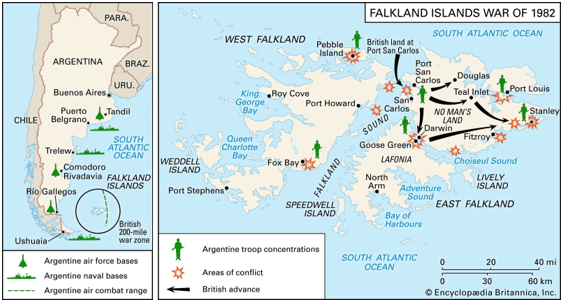
• The Falklands War was a short but intense conflict between the United Kingdom and Argentina over sovereignty of the Falkland Islands (Islas Malvinas) in the South Atlantic.
• The dispute has colonial origins, with the UK maintaining control since 1833, while Argentina viewed it as a colonial imposition on its territory.
• Argentina invaded the islands on April 2, 1982, but British forces launched a counteroffensive and regained control within about 10 weeks.
• The conflict ended with Argentina’s surrender on June 14, 1982, after which the UK retained continuous administration.
• The war had major political consequences, strengthening leadership in the UK while contributing to the fall of Argentina’s military regime.
About the Falkland Islands
• The Falkland Islands are a self-governing British Overseas Territory located in the South Atlantic Ocean, about 480 km east of South America.
• The capital is Stanley, and the islands include two main islands—East and West Falkland—and about 200 smaller islands.
• The region has a cool, windy climate, treeless landscapes, and rich biodiversity, including penguins, seals, and seabirds.
• Economically, fishing and related industries dominate, while the UK maintains a military presence at Mount Pleasant.
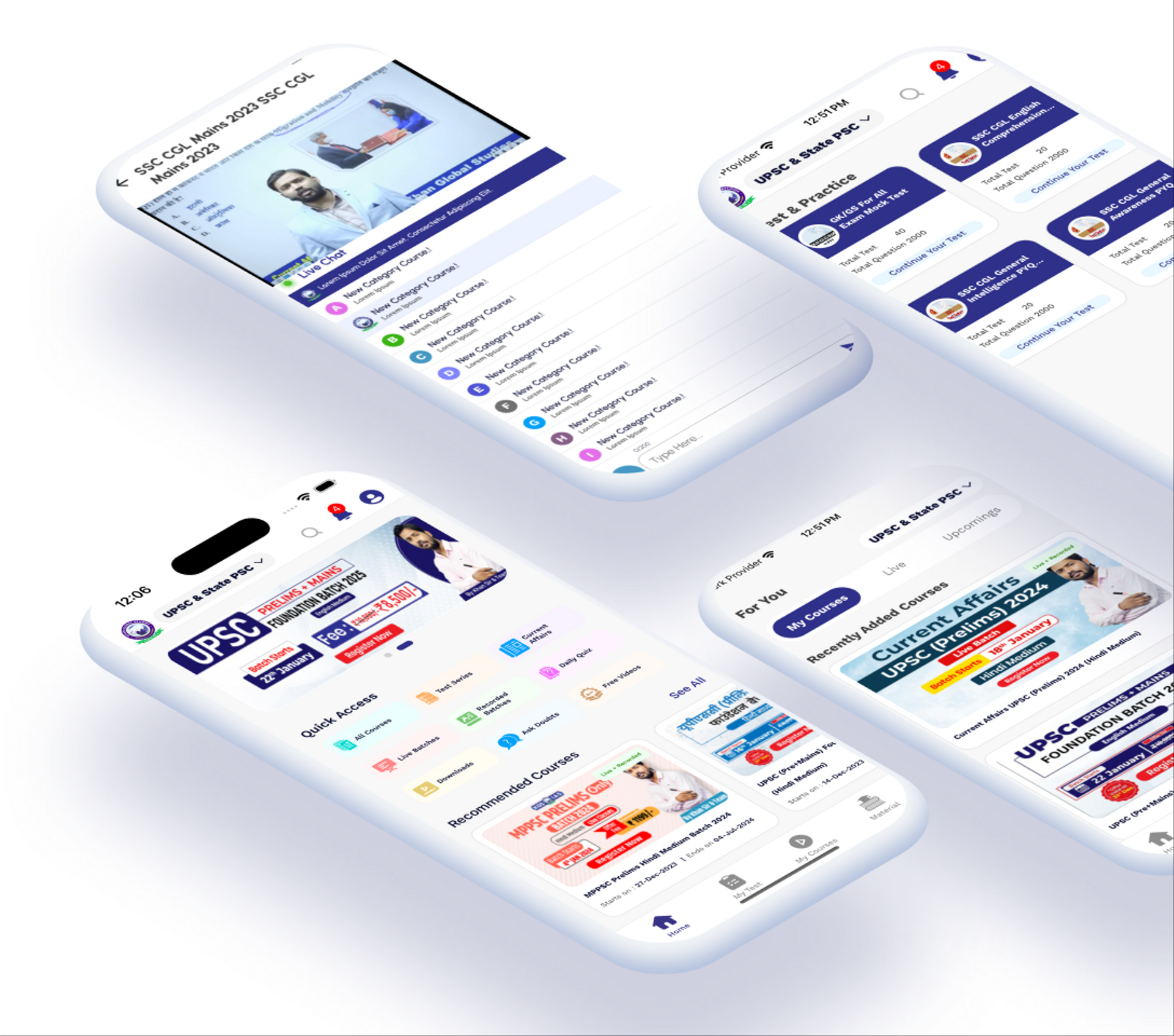
The most trusted learning platform on your phone
With our training programs, learning online can be a very exciting experience! Take the next step toward achieving your professional and personal objectives


Course Related Query:
Ask Your DoubtsStore Related Query:[email protected]NCERT Books
Resources
We love learning. Through our innovative solutions, we encourage ourselves, our teams, and our Students to grow. We welcome and look for diverse perspectives and opinions because they enhance our decisions. We strive to understand the big picture and how we contribute to the company’s objectives. We approach challenges with optimism and harness the power of teamwork to accomplish our goals. These aren’t just pretty words to post on the office wall. This is who we are. It’s how we work. And it’s how we approach every interaction with each other and our Students.
Come with an open mind, hungry to learn, and you’ll experience unmatched personal and professional growth, a world of different backgrounds and perspectives, and the freedom to be you—every day. We strive to build and sustain diverse teams and foster a culture of belonging. Creating an inclusive environment where every students feels welcome, appreciated, and heard gives us something to feel (really) good about.
Get Free academic Counseling & Course Details