You're all caught up—no notifications available.
Explore All Exams at KGS


All Exams
Explore All Exams at KGS

Khan Sir Courses
Geography I Polity I History | World Map I Indian Map I Economics I Biology

UPSC & State PSC
UPSC I BPSC I UP-PSC I MP-PSC

State Exams
UP I Bihar I MP | Rajasthan

NEET | JEE | CUET | Boards
NEET | JEE | CUET | Boards

Defence Exams
NDA I CDS I CAPF I AFCAT I SSB I Agniveer

Police Exams
UP SI | Bihar SI | Delhi Police | UP Constable

SSC Exams
CGL I CPO I CHSL I MTS I SSC GD I Delhi Police

Foundation Courses
Physics I Chemistry I Biology I History I Geography I Polity I NCERT I Math I English | Map I Reasoning

Railway Exams
RRB | RPF

Teaching Exams
TET | Teaching | UGC

Banking Exams
SBI | RBI | IBPS

Engineering Exams
Civil | Electrical | Mechanical
UGC NET
UGC NET/JRF
Current Affairs provides you with the best compilation of the Daily Current Affairs taking place across the globe: National, International, Sports, Science and Technology, Banking, Economy, Agreement, Appointments, Ranks, and Report and General Studies

SYLLABUS
GS-2: Issues Relating to the Development and Management of Social Sector/Services relating to Health, Education and Human Resources.
Context: In a significant ruling affirming the reproductive autonomy and bodily integrity of women in India, the Supreme Court recently allowed the medical termination of a 30-week-old pregnancy of a minor, which had crossed the 24-week deadline stipulated under the MTP Act.
More in the News
• The Supreme Court reiterated that reproductive autonomy and bodily integrity of the pregnant person must be given primacy over competing interests, including in advanced gestation cases.
• The court observed that once pregnancies cross the 24-week ceiling under the Medical Termination of Pregnancy (MTP) Act, 1971, women may be forced toward unsafe and illegal abortions, posing serious health risks.
• The judgment stressed the need for a more humane, flexible, and rights-based approach to abortion laws that prioritises women’s safety and autonomy.
What is Abortion?
• Abortion refers to the intentional termination of pregnancy before fetal viability, carried out through medication or medical procedures, subject to legal gestational limits and medical indications.
• Abortion is a sensitive and often debated issue. People have different opinions about it based on their values, beliefs, religion and the law.
Legal Provisions for abortion in India
• Until the 1960s, abortion was illegal in India under Section 312 IPC, except when done in good faith to save the woman’s life.
• The Shantilal Shah Committee examined the issue and recommended liberalising the law, leading to the enactment of the MTP Act, 1971, to allow safe and legal abortions.
• While the MTP Act fixes a ceiling for availing legal abortions, the Supreme Court has allowed termination beyond these limits in exceptional circumstances, including pregnancies arising from non-consensual marital intercourse, by invoking reproductive autonomy, dignity, and health under Article 21.
• Sex selective abortions remain illegal under the Pre-Conception and Pre-Natal Diagnostic Techniques (PCPNDT) Act, 1994.
Medical Termination of Pregnancy Act (MTP) Act 1971
• As per Section 3 of the MTP Act, the termination of pregnancy up to 20 weeks of conception can be undertaken on the advice of one registered medical practitioner.
• In the case of pregnancy between 20 and 24 weeks, abortion is permitted only after two registered medical practitioners opine for it.
• Rule 3B of the MTP Rules formed under the MTP Act permits abortion between 20 to 24 weeks of pregnancy for some categories, including victims of sexual assault or rape, minors, a change in the marital status of a woman during pregnancy, women with physical disabilities or mental illness.
• After 24 weeks, the MTP Act requires medical boards of expert doctors to be set up by the state government in each district, which opine on whether to allow termination of pregnancy in case of substantial foetal abnormality.
• MTP Amendment Act, 2021
Source:
The Hindu
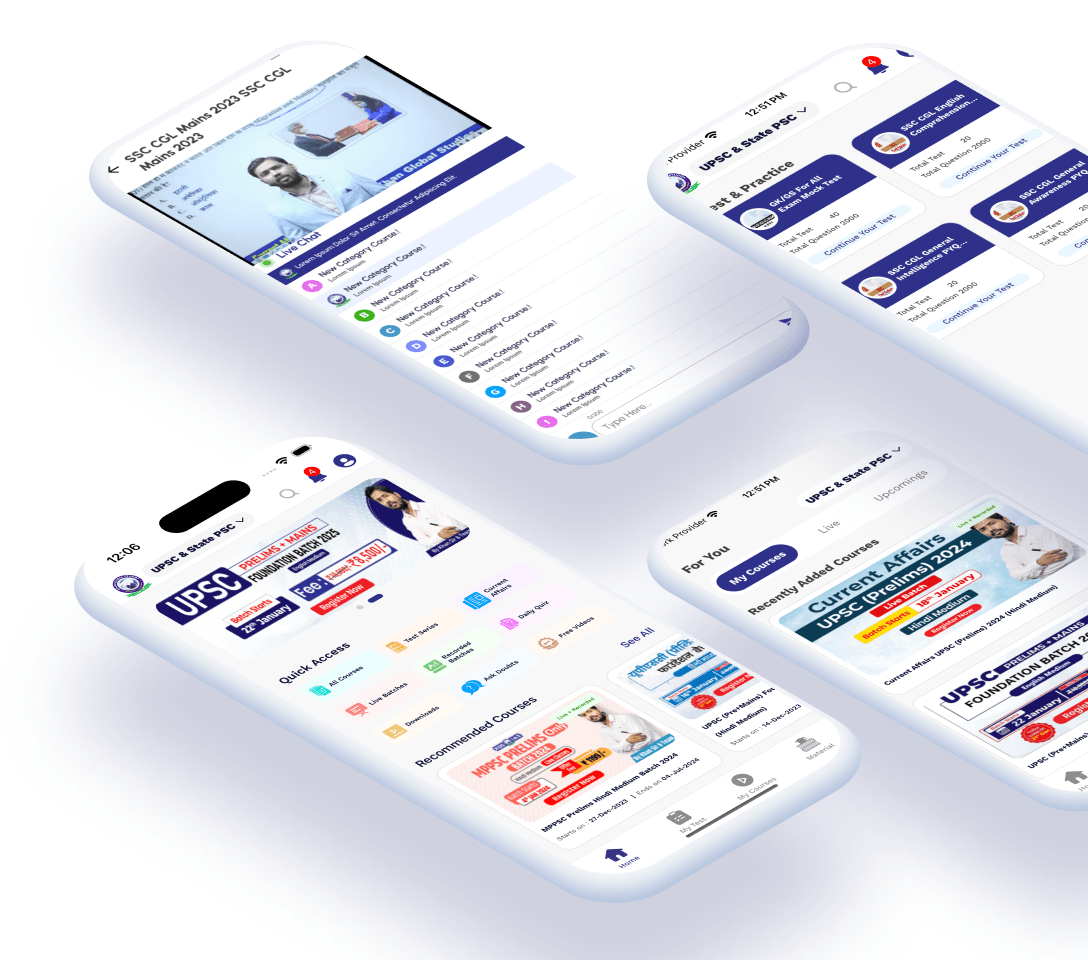
The most trusted learning platform on your phone
With our training programs, learning online can be a very exciting experience! Take the next step toward achieving your professional and personal objectives



NCERT Books
Resources
We love learning. Through our innovative solutions, we encourage ourselves, our teams, and our Students to grow. We welcome and look for diverse perspectives and opinions because they enhance our decisions. We strive to understand the big picture and how we contribute to the company’s objectives. We approach challenges with optimism and harness the power of teamwork to accomplish our goals. These aren’t just pretty words to post on the office wall. This is who we are. It’s how we work. And it’s how we approach every interaction with each other and our Students.
Come with an open mind, hungry to learn, and you’ll experience unmatched personal and professional growth, a world of different backgrounds and perspectives, and the freedom to be you—every day. We strive to build and sustain diverse teams and foster a culture of belonging. Creating an inclusive environment where every students feels welcome, appreciated, and heard gives us something to feel (really) good about.
Get Free academic Counseling & Course Details