You're all caught up—no notifications available.
Explore All Exams at KGS


All Exams
Explore All Exams at KGS

Khan Sir Courses
Geography I Polity I History | World Map I Indian Map I Economics I Biology

UPSC & State PSC
UPSC I BPSC I UP-PSC I MP-PSC

State Exams
UP I Bihar I MP | Rajasthan

NEET | JEE | CUET
NEET | JEE | CUET

Defence Exams
NDA I CDS I CAPF I AFCAT I SSB I Agniveer

Police Exams
UP SI | Bihar SI | Delhi Police | UP Constable

SSC Exams
CGL I CPO I CHSL I MTS I SSC GD I Delhi Police

Foundation Courses
Physics I Chemistry I Biology I History I Geography I Polity I NCERT I Math I English | Map I Reasoning

Railway Exams
RRB | RPF
Teaching Exams
TET | Teaching | UGC

Banking Exams
SBI | RBI | IBPS

Engineering Exams
Civil | Electrical | Mechanical
UGC NET
UGC NET/JRF
Current Affairs provides you with the best compilation of the Daily Current Affairs taking place across the globe: National, International, Sports, Science and Technology, Banking, Economy, Agreement, Appointments, Ranks, and Report and General Studies
SYLLABUS
GS-2: Global Groupings and Agreements involving India and/or affecting India’s interests; Important International Institutions, agencies and fora - their Structure, Mandate.
Context: India recently called for a more inclusive, humane, and rights-based migration framework during the Second International Migration Review Forum (IMRF) of the Global Compact for Migration (GCM), held at the United Nations General Assembly (UNGA).
More on the News
• India emphasised that migration governance must remain people-centric, inclusive, and development-oriented while ensuring the dignity and safety of migrants.
• India highlighted the positive contribution of migrants toward economic growth, labour mobility, innovation, and cultural exchange across countries.
• It called for safer and regular migration pathways, ethical recruitment systems, portability of social protection benefits, and mutual recognition of skills.
• India has remained the world’s largest recipient of remittances since 2010, with inward remittances increasing from nearly $53.48 billion in 2010 to around $137.67 billion in 2024.
• Earlier, a report by the International Organization for Migration (IOM) identified the India–UAE and India–U.S. corridors among the top ten international migration corridors globally in 2024.
About the Global Compact for Migration (GCM)
• The Global Compact for Safe, Orderly and Regular Migration (GCM) was adopted in 2018 at Marrakesh, Morocco, under the auspices of the United Nations.
• It is the first comprehensive intergovernmental framework dealing with all dimensions of international migration.
• The GCM is non-legally binding and is based on principles of:
o international cooperation,
o shared responsibility,
o respect for state sovereignty, and
o protection of migrants’ human rights.
• The Compact outlines 23 objectives covering areas such as safe migration pathways, reduction of migrant vulnerabilities, ethical recruitment, labour mobility, and international cooperation.
• The International Migration Review Forum (IMRF), held every four years, serves as the primary global platform for reviewing implementation of the GCM.
Key Concerns Related to Migration and Human Trafficking
• Irregular Migration and Migrant Exploitation: Irregular and undocumented migration channels expose migrants to unsafe working conditions, wage exploitation, forced labour, debt bondage, and trafficking networks.
• Expansion of Transnational Trafficking Networks: Human trafficking has increasingly become a transnational organised crime involving fraudulent recruitment agencies, digital platforms, and illegal cross-border migration routes.
• Vulnerability of Women and Children: Women and children remain disproportionately vulnerable to trafficking, sexual exploitation, domestic servitude, bonded labour, and other forms of abuse.
• Gaps in Social Protection for Migrants: Migrant workers in many countries continue to face inadequate access to healthcare, insurance, legal safeguards, and portability of welfare benefits.
• Climate Change and Emerging Migration Pressures: Climate change, environmental degradation, and livelihood insecurity are increasingly contributing to displacement and migration vulnerabilities, particularly in developing countries.
India’s Migration Approach
• India’s migration framework extends beyond border management and increasingly focuses on migrant protection, welfare, skill recognition, and cooperation with destination countries.
• India has developed institutional and digital mechanisms such as the e-Migrate portal and grievance redressal systems to improve transparency and protection for overseas workers.
• The government has signed several bilateral agreements and Memoranda of Understanding (MoUs) with countries such as Bangladesh, the UAE, Cambodia, and Myanmar to strengthen cooperation on trafficking prevention, repatriation, and migrant welfare.
• India has also ratified the UN Convention against Transnational Organized Crime (UNCTOC) Protocol on Trafficking in Persons, especially women and children.
o India has additionally ratified the SAARC Convention on Preventing and Combating Trafficking in Women and Children for Prostitution (2002).
• India’s domestic anti-trafficking legal framework includes:
o Article 23 of the Constitution, which prohibits trafficking and forced labour
o the Immoral Traffic (Prevention) Act, 1956
o Section 143 and Section 144 of the Bharatiya Nyaya Sanhita (BNS), 2023
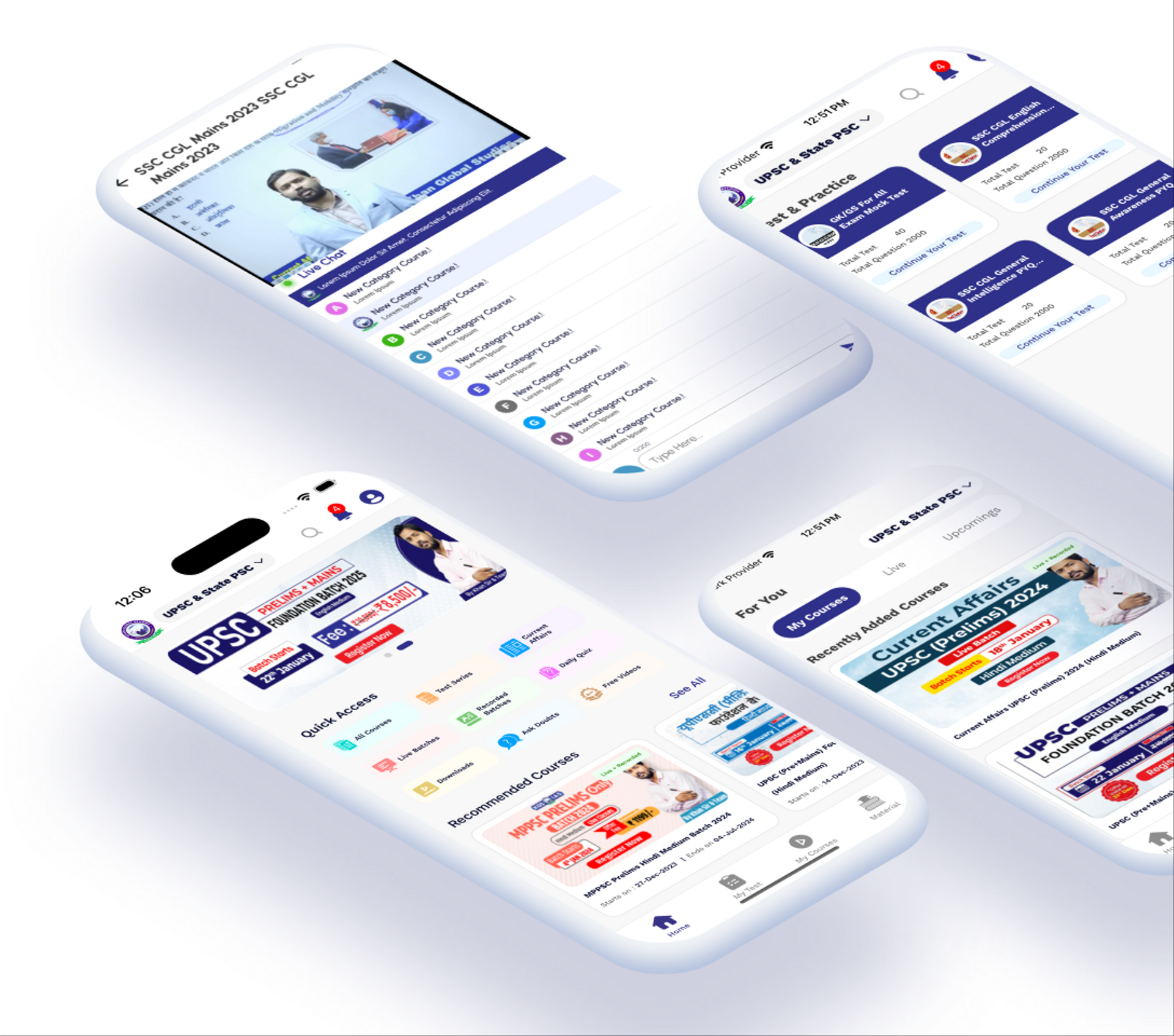
The most trusted learning platform on your phone
With our training programs, learning online can be a very exciting experience! Take the next step toward achieving your professional and personal objectives


Course Related Query:
Ask Your DoubtsStore Related Query:[email protected]NCERT Books
Resources
We love learning. Through our innovative solutions, we encourage ourselves, our teams, and our Students to grow. We welcome and look for diverse perspectives and opinions because they enhance our decisions. We strive to understand the big picture and how we contribute to the company’s objectives. We approach challenges with optimism and harness the power of teamwork to accomplish our goals. These aren’t just pretty words to post on the office wall. This is who we are. It’s how we work. And it’s how we approach every interaction with each other and our Students.
Come with an open mind, hungry to learn, and you’ll experience unmatched personal and professional growth, a world of different backgrounds and perspectives, and the freedom to be you—every day. We strive to build and sustain diverse teams and foster a culture of belonging. Creating an inclusive environment where every students feels welcome, appreciated, and heard gives us something to feel (really) good about.
Get Free academic Counseling & Course Details