You're all caught up—no notifications available.
Explore All Exams at KGS


All Exams
Explore All Exams at KGS

Khan Sir Courses
Geography I Polity I History | World Map I Indian Map I Economics I Biology

UPSC & State PSC
UPSC I BPSC I UP-PSC I MP-PSC

State Exams
UP I Bihar I MP | Rajasthan

NEET | JEE | CUET | Boards
NEET | JEE | CUET | Boards

Defence Exams
NDA I CDS I CAPF I AFCAT I SSB I Agniveer

Police Exams
UP SI | Bihar SI | Delhi Police | UP Constable

SSC Exams
CGL I CPO I CHSL I MTS I SSC GD I Delhi Police

Foundation Courses
Physics I Chemistry I Biology I History I Geography I Polity I NCERT I Math I English | Map I Reasoning

Railway Exams
RRB | RPF

Teaching Exams
TET | Teaching | UGC

Banking Exams
SBI | RBI | IBPS

Engineering Exams
Civil | Electrical | Mechanical
UGC NET
UGC NET/JRF
Current Affairs provides you with the best compilation of the Daily Current Affairs taking place across the globe: National, International, Sports, Science and Technology, Banking, Economy, Agreement, Appointments, Ranks, and Report and General Studies

SYLLABUS
GS-2: Government Policies and Interventions for Development in various sectors and Issues arising out of their Design and Implementation.
GS-3: Challenges to internal security through communication networks; Security challenges and their management in border areas.
Context: The Ministry of Defence recently released the draft of the Defence Acquisition Procedure (DAP) 2026, seeking suggestions and comments from all stakeholders.
More on the News
• The draft DAP 2026 seeks to replace the DAP 2020, which is in vogue now.
• The Defence Acquisition Procedure serves as the foundational framework for capital acquisitions undertaken by the Ministry of Defence.
• Its primary objective is to propel Jointness, Atmanirbharta & Integration, Force Modernisation, and Speed of acquisition with scaling of production, leading to the growth and development of the defence ecosystem in the country.
• The proposed draft aims to align India’s defence acquisition with the rapidly evolving geo-strategic landscape, growth of Indian economy, skilling of human capital, growth of private defence industry in the country and the technological imperatives of modern warfare.
• The new policy shifts India's focus from “Made in India” to “Owned by India”, emphasising domestic Intellectual Property (IP), design authority, and source code access.
• The draft is currently open for public feedback on the Ministry of Defence website until March 3, 2026.
Major Changes Proposed in DAP 2026 as Compared to DAP 2020
Key Structural & Indigenous Reforms
• Increased Indigenous Content (IC): The IC requirement for the Buy Indian–IDDM (Indian Indigenously Designed Developed and Manufactured) category has been raised from 50% to 60%.
• Category Simplification: The number of procurement categories has been reduced from five to four to streamline the acquisition framework.
• Mandatory Design Definition: For the first time, "Indigenous Design" is clearly defined to ensure genuine domestic development and prevent rebranding of foreign tech.
• Technology Readiness Level (TRL): A new TRL-based categorisation system has been introduced to better align procurement with product maturity.
• Involvement of Subject Experts: The draft also proposes involving subject experts in the finalisation of Services Qualitative Requirements (SQRs) and in the oversight of trials.
Speed and Simplification Measures
• New Procurement Routes:
• Refined Trial Processes:
• Fast Track Procedure (FTP): Refined with downward delegation of powers for procurement involving emerging technologies with shorter development cycles.
Industry & Start-up Empowerment
• Assured Orders: Make and iDEX projects now come with five years of assured orders and provisions for "spiral development" (iterative upgrades).
• Single Vendor Cases: Ab-initio single-vendor procurement is now permitted in the Buy (Indian-IDDM) category for high-maturity equipment (TRL 6 to 9).
• Timeline Monitoring: Tracking now begins from the Request for Information (RFI) stage to ensure adherence to acquisition schedules.
Significance of the Defence Acquisition Procedure (DAP) 2026
• Strengthening Atmanirbhar Bharat in Defence: The DAP 2026 reinforces preference for the Buy Indian–IDDM. This reduces import dependence and promotes domestic defence production.
• Accelerating Capital Procurement and Force Modernisation: The DAP governs capital acquisitions under the Ministry of Defence and streamlines procedures to ensure faster procurement of advanced military platforms suited to modern warfare requirements.
• Promoting Indigenous Design and Intellectual Property Rights (IPR): The policy encourages indigenous designing and retention of Intellectual Property Rights to strengthen long-term technological capability and innovation within India.
• Boosting Defence Manufacturing and Exports: The DAP 2026 supports participation of private industry, including Micro Small and Medium Enterprises and promotes defence exports, thereby strengthening the national defence ecosystem and contributing to economic growth.
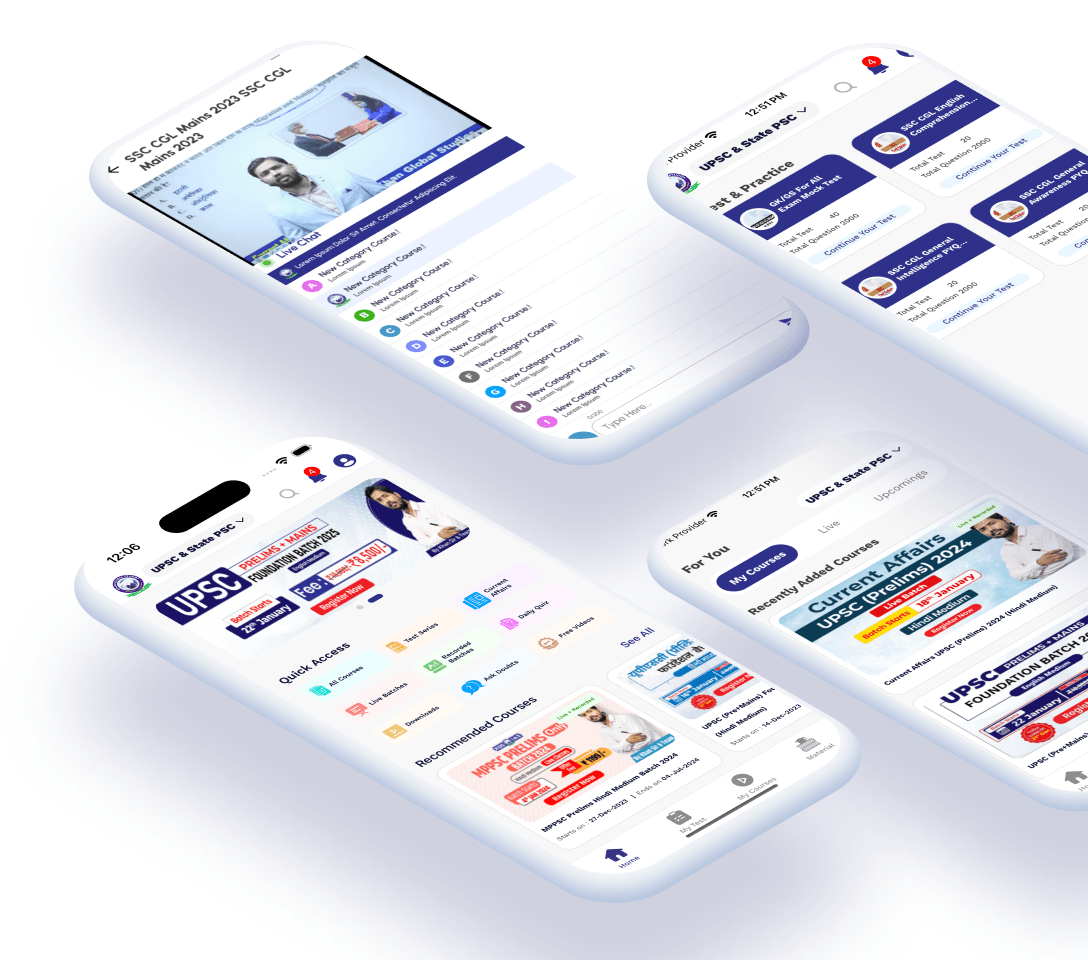
The most trusted learning platform on your phone
With our training programs, learning online can be a very exciting experience! Take the next step toward achieving your professional and personal objectives



Course Related Query:
Ask Your DoubtsStore Related Query:[email protected]NCERT Books
Resources
We love learning. Through our innovative solutions, we encourage ourselves, our teams, and our Students to grow. We welcome and look for diverse perspectives and opinions because they enhance our decisions. We strive to understand the big picture and how we contribute to the company’s objectives. We approach challenges with optimism and harness the power of teamwork to accomplish our goals. These aren’t just pretty words to post on the office wall. This is who we are. It’s how we work. And it’s how we approach every interaction with each other and our Students.
Come with an open mind, hungry to learn, and you’ll experience unmatched personal and professional growth, a world of different backgrounds and perspectives, and the freedom to be you—every day. We strive to build and sustain diverse teams and foster a culture of belonging. Creating an inclusive environment where every students feels welcome, appreciated, and heard gives us something to feel (really) good about.
Get Free academic Counseling & Course Details