You're all caught up—no notifications available.
Explore All Exams at KGS


All Exams
Explore All Exams at KGS

Khan Sir Courses
Geography I Polity I History | World Map I Indian Map I Economics I Biology

UPSC & State PSC
UPSC I BPSC I UP-PSC I MP-PSC

State Exams
UP I Bihar I MP | Rajasthan

NEET | JEE | CUET
NEET | JEE | CUET

Defence Exams
NDA I CDS I CAPF I AFCAT I SSB I Agniveer

Police Exams
UP SI | Bihar SI | Delhi Police | UP Constable

SSC Exams
CGL I CPO I CHSL I MTS I SSC GD I Delhi Police

Foundation Courses
Physics I Chemistry I Biology I History I Geography I Polity I NCERT I Math I English | Map I Reasoning

Railway Exams
RRB | RPF

Teaching Exams
TET | Teaching | UGC

Banking Exams
SBI | RBI | IBPS

Engineering Exams
Civil | Electrical | Mechanical
UGC NET
UGC NET/JRF
Current Affairs provides you with the best compilation of the Daily Current Affairs taking place across the globe: National, International, Sports, Science and Technology, Banking, Economy, Agreement, Appointments, Ranks, and Report and General Studies

SYLLABUS
GS-2: Government Policies and Interventions for Development in various sectors and Issues arising out of their Design and Implementation.
GS-3: Indian Economy and issues relating to Planning, Mobilization of Resources, Growth, Development and Employment.
Context: Recently, the Government highlighted a decade of reforms aimed at improving India's Ease of Doing Business (EoDB) ecosystem through regulatory simplification, digital governance and trust-based administration.
Key Performance Metrics
• India's rank in the World Bank's Doing Business Report improved from 142 (2014) to 63 (2019), while its IMD World Competitiveness Ranking improved from 43 (2021) to 41 (2025).
• India has been placed in Group A of the World Bank's GovTech Maturity Index in 2020, 2022 and 2025, reflecting strong digital governance capabilities.
• The reforms signify a shift from a compliance-heavy regulatory regime towards a facilitation-driven and trust-based governance framework.
• Reforms have targeted the entire business lifecycle, including business entry, land and permits, taxation, credit access, logistics, trade facilitation and insolvency resolution.
Major Reforms Undertaken to Promote EoDB
• Startup and Enterprise Ecosystem
• Land and Property Reforms
• Expanding Market Opportunities
• Improving Logistics and Connectivity
• Improving Access to Finance
• Tax and Digital Public Infrastructure Reforms
• Trust-Based Governance and Regulatory Reforms
Significance of India's EoDB Reforms
• Promoting Entrepreneurship and Formalisation: Simplified registration processes, digital platforms and easier credit access have encouraged business creation and formalisation of enterprises.
• Enhancing Investor Confidence: Faster approvals, transparent regulations and insolvency reforms have improved the predictability and attractiveness of India's business environment.
• Driving Digital-Led Governance: Adoption of digital public infrastructure and online service delivery has reduced transaction costs and improved efficiency.
• Strengthening Global Competitiveness: Reforms in logistics, trade facilitation and market access have improved India's position as a preferred investment and manufacturing destination.
• Transitioning to Trust-Based Governance: Compliance reduction, decriminalisation and technology-enabled regulation have shifted governance from control-based oversight to facilitation-oriented administration.
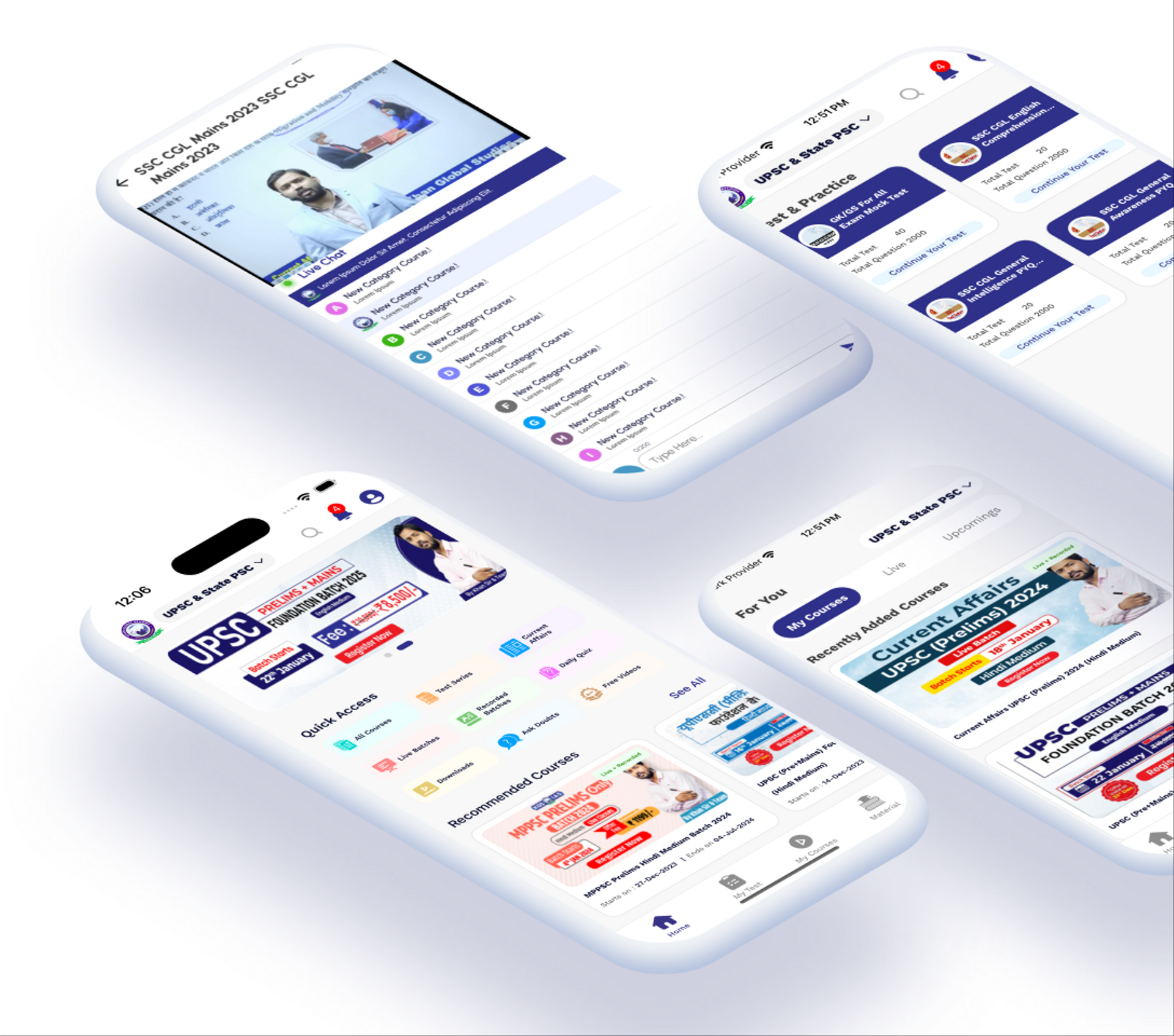
The most trusted learning platform on your phone
With our training programs, learning online can be a very exciting experience! Take the next step toward achieving your professional and personal objectives



Course Related Query:
Ask Your DoubtsStore Related Query:[email protected]NEET | JEE | CUET
NCERT Books
Resources
We love learning. Through our innovative solutions, we encourage ourselves, our teams, and our Students to grow. We welcome and look for diverse perspectives and opinions because they enhance our decisions. We strive to understand the big picture and how we contribute to the company’s objectives. We approach challenges with optimism and harness the power of teamwork to accomplish our goals. These aren’t just pretty words to post on the office wall. This is who we are. It’s how we work. And it’s how we approach every interaction with each other and our Students.
Come with an open mind, hungry to learn, and you’ll experience unmatched personal and professional growth, a world of different backgrounds and perspectives, and the freedom to be you—every day. We strive to build and sustain diverse teams and foster a culture of belonging. Creating an inclusive environment where every students feels welcome, appreciated, and heard gives us something to feel (really) good about.
Get Free academic Counseling & Course Details