You're all caught up—no notifications available.
Explore All Exams at KGS


All Exams
Explore All Exams at KGS

Khan Sir Courses
Geography I Polity I History | World Map I Indian Map I Economics I Biology

UPSC & State PSC
UPSC I BPSC I UP-PSC I MP-PSC

State Exams
UP I Bihar I MP | Rajasthan

NEET | JEE | CUET
NEET | JEE | CUET

Defence Exams
NDA I CDS I CAPF I AFCAT I SSB I Agniveer

Police Exams
UP SI | Bihar SI | Delhi Police | UP Constable

SSC Exams
CGL I CPO I CHSL I MTS I SSC GD I Delhi Police

Foundation Courses
Physics I Chemistry I Biology I History I Geography I Polity I NCERT I Math I English | Map I Reasoning

Railway Exams
RRB | RPF

Teaching Exams
TET | Teaching | UGC

Banking Exams
SBI | RBI | IBPS

Engineering Exams
Civil | Electrical | Mechanical
UGC NET
UGC NET/JRF
Current Affairs provides you with the best compilation of the Daily Current Affairs taking place across the globe: National, International, Sports, Science and Technology, Banking, Economy, Agreement, Appointments, Ranks, and Report and General Studies

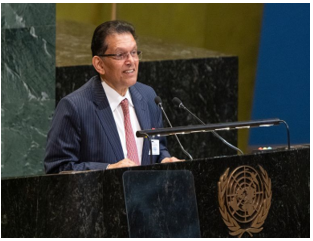
Bangladesh FM Khalilur Rahman Elected President of 81st UNGA Session
Context: Bangladesh Foreign Minister Dr. Khalilur Rahman was elected President of the 81st Session of the United Nations General Assembly (UNGA), defeating Cyprus’s Andreas Kakouris in a closely contested vote.
More on the News
• Rahman secured 99 votes against 91 votes for Kakouris in the election held among the 193 UN member states and will assume office in September 2026.
• He announced the theme of his presidency as “Restoring Trust, Managing Transformation: A United Nations that Delivers for All.”
• His tenure will coincide with key global discussions on conflicts, economic challenges, sustainable development, UN reforms, and the selection process for the successor to UN Secretary-General António Guterres.
About the United Nations General Assembly (UNGA)
• It is the main policy-making and deliberative organ of the United Nations and one of its six principal organs.
• It comprises all 193 UN member states, each having one vote, irrespective of size or power.
• It serves as a global forum for multilateral discussion on international issues covered under the UN Charter.
• The UNGA adopts resolutions and recommendations on issues such as peace and security, development, human rights, climate change, and international cooperation.
• Key functions include approving the UN budget, appointing the UN Secretary-General on the recommendation of the Security Council, and electing non-permanent members of the Security Council.
• Important decisions on matters such as peace and security, admission of new members, and budgetary issues require a two-thirds majority, while other matters are decided by a simple majority.
• The Assembly works through six Main Committees dealing with areas such as disarmament, economic affairs, social issues, legal matters, and administrative and budgetary questions.
• It meets annually from September, and its President serves a one-year term under a regional rotation system.
• Although UNGA resolutions are generally non-binding, they carry significant political and moral authority and often reflect global opinion.
India–UK Critical Minerals Global Supply Chain Observatory (GSCO)
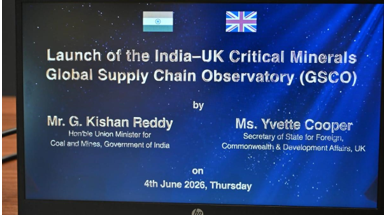
Context: India and the United Kingdom jointly launched the India–UK Critical Minerals Global Supply Chain Observatory (GSCO) in New Delhi to strengthen cooperation on critical minerals and resilient supply chains.
About the India–UK Critical Minerals Global Supply Chain Observatory (GSCO)
• The GSCO is a joint initiative of the Technology Innovation in Exploration & Mining Foundation (TEXMiN), IIT (ISM) Dhanbad, and the University of Cambridge.
• The initiative was first announced during the India–UK Prime Ministers’ bilateral engagement in October 2025 and formalized through a Research Collaboration Agreement in March 2026.
• The Observatory will function as a data-driven platform for monitoring and analysing global critical mineral supply chains.
• It will help identify supply risks and disruptions, generate market intelligence, and support evidence-based policymaking.
• The platform aims to strengthen supply chain intelligence under India’s National Critical Mineral Mission (NCMM).
• It supports secure access to critical minerals essential for clean energy technologies, electric mobility, advanced manufacturing, and emerging technologies.
• The initiative seeks to promote resilient, diversified, secure, and sustainable critical mineral value chains through enhanced India–UK cooperation.
• It is expected to facilitate information-sharing, technology collaboration, and informed decision-making for governments, industry, and researchers.
Seventh Regional Meteorological Centre (RMC), Jammu
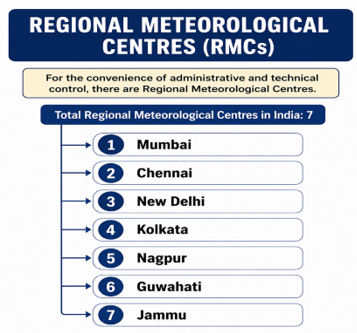
Context: The Union Minister for Science & Technology and Earth Sciences inaugurated the Seventh Regional Meteorological Centre (RMC) at Jammu to strengthen weather forecasting and disaster warning services in the Himalayan region.
About the Seventh Regional Meteorological Centre (RMC)
• The Jammu RMC is the 7th Regional Meteorological Centre of the India Meteorological Department (IMD).
• It will serve Jammu & Kashmir, Ladakh, and Himachal Pradesh with specialised weather, climate, and disaster-warning services.
• The Centre will provide district-level forecasts, mountain weather forecasts, tourist advisories, city-specific weather services, and early warnings.
• It will issue alerts for flash floods, cloudbursts, avalanches, heavy snowfall, thunderstorms, and landslides.
• The facility is designed to address the unique forecasting needs of the Himalayan region, ranging from plains to high-altitude mountains.
• It marks a restructuring of IMD’s regional operations, with Jammu taking over weather services for Jammu & Kashmir, Ladakh, and Himachal Pradesh from the Delhi RMC.
• A new RMC is also proposed in Lucknow, which will cater to Uttar Pradesh and Uttarakhand.
• The Centre will benefit pilgrims, farmers, transport operators, hydropower projects, disaster management agencies, and security forces.
• The initiative is supported by the expansion of meteorological infrastructure under Mission Mausam, including additional Doppler Weather Radars, Automatic Weather Stations (AWSs), and Automatic Rain Gauges (ARGs).
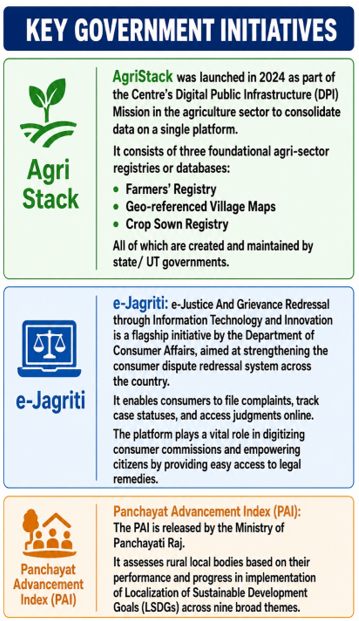
National Awards for e-Governance (NAeG) 2026
Context: The Union Government has announced the winners of the National Awards for e-Governance (NAeG) 2026, which will be conferred at the 29th National Conference on e-Governance (1–2 July 2026, Jaipur) themed “Viksit Bharat 2047: AI-Enabled, Data-Driven and Secure Digital Governance.”
About the National Awards for e-Governance (NAeG)
• The NAeG are annual awards presented by the Department of Administrative Reforms and Public
• Grievances (DAR&PG), Government of India.
• Instituted in 2003, the awards aim to recognise, promote, and encourage excellence in the implementation of e-Governance initiatives across the country.
• The awards honour innovative projects that improve public service delivery, transparency, efficiency, accountability, and citizen-centric governance through digital technologies.
• Awards and Incentives:
• Notable Winners of NAeG 2026
India’s E85 Fuel Rollout
Context: Union Minister for Petroleum and Natural Gas launched E85 fuel at an IndianOil retail outlet in New Delhi on World Environment Day 2026 to promote cleaner transportation and strengthen India’s ethanol-based fuel ecosystem.
About E85 Fuel
• E85 is a high-ethanol blended fuel containing 80–85% ethanol and 14–19% petrol.
• It is designed exclusively for Flex-Fuel Vehicles (FFVs), which can operate on ethanol blends ranging from E20 to E100.
• The fuel is being introduced at 48 public sector fuel stations and will be expanded to 500 outlets by December 2026 and 5,000 outlets by December 2027.
About Ethanol-Based Fuel
• Ethanol is a renewable biofuel produced mainly from agricultural feedstocks such as sugarcane, maize, and other biomass sources.
• It is blended with petrol to reduce dependence on imported crude oil, lower greenhouse gas emissions, and support domestic agriculture.
• India has increased ethanol blending in petrol from 1.53% in 2014 to 20% in 2026, achieving its target five years ahead of schedule.
Significance of E85
• Environmental Benefits: E85 can reduce lifecycle greenhouse gas emissions by around 61% and promotes cleaner combustion with lower particulate emissions.
• Energy Security: E85 reduces dependence on imported crude oil and supports India’s target of achieving nearly 26% ethanol blending by 2030–31.
• Benefits to Farmers and Economy: Increased ethanol demand can boost farmers’ income while saving foreign exchange through reduced crude oil imports.
• Vehicle Performance: Ethanol’s high Research Octane Number (RON) of about 108 enables better engine efficiency and performance in flex-fuel vehicles.
• Promotion of Flex-Fuel Ecosystem: E85 supports the adoption of Flex-Fuel Vehicles (FFVs) and the development of a nationwide flex-fuel ecosystem.
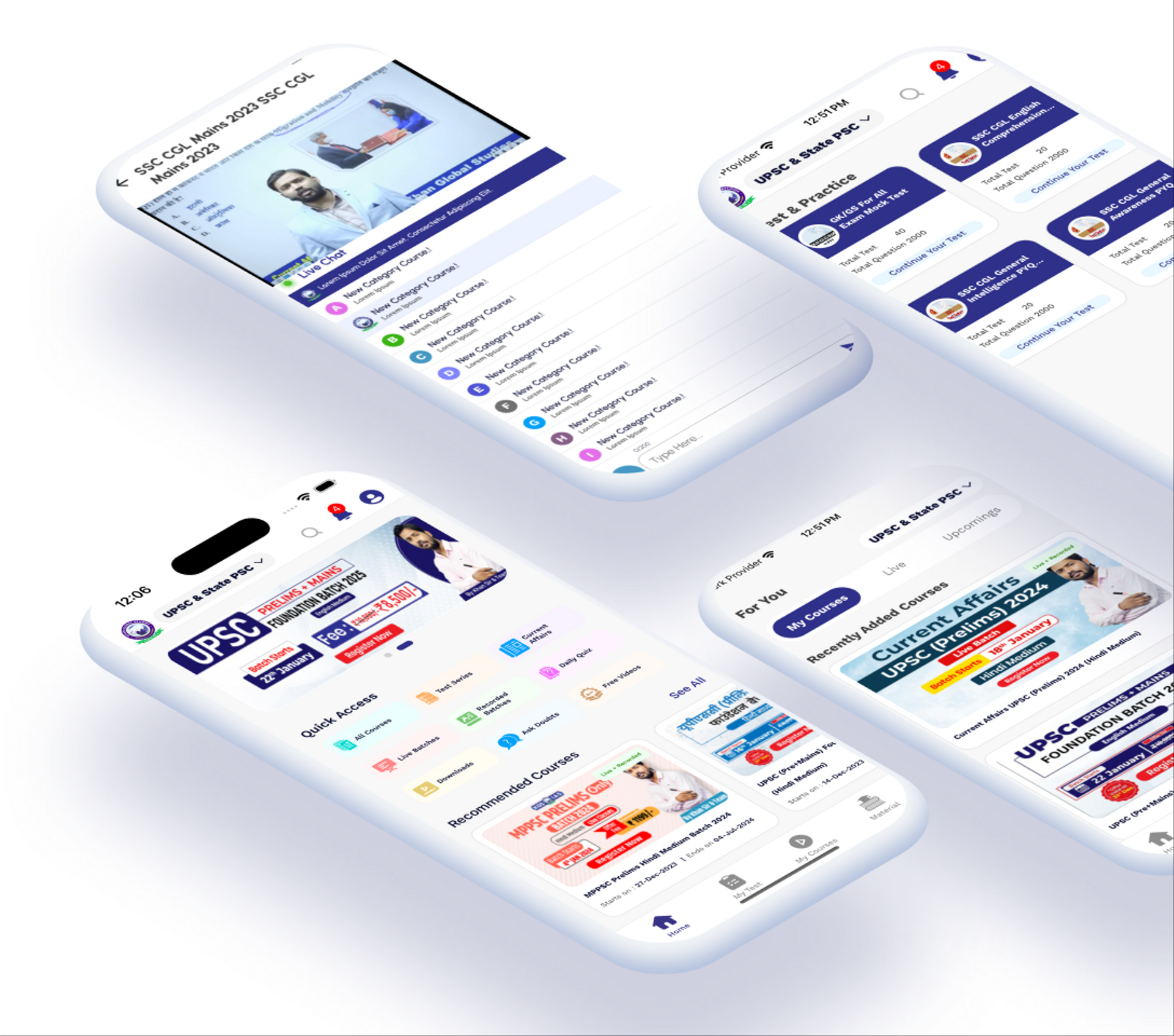
The most trusted learning platform on your phone
With our training programs, learning online can be a very exciting experience! Take the next step toward achieving your professional and personal objectives


Course Related Query:
Ask Your DoubtsStore Related Query:[email protected]NEET | JEE | CUET
NCERT Books
Resources
We love learning. Through our innovative solutions, we encourage ourselves, our teams, and our Students to grow. We welcome and look for diverse perspectives and opinions because they enhance our decisions. We strive to understand the big picture and how we contribute to the company’s objectives. We approach challenges with optimism and harness the power of teamwork to accomplish our goals. These aren’t just pretty words to post on the office wall. This is who we are. It’s how we work. And it’s how we approach every interaction with each other and our Students.
Come with an open mind, hungry to learn, and you’ll experience unmatched personal and professional growth, a world of different backgrounds and perspectives, and the freedom to be you—every day. We strive to build and sustain diverse teams and foster a culture of belonging. Creating an inclusive environment where every students feels welcome, appreciated, and heard gives us something to feel (really) good about.
Get Free academic Counseling & Course Details