You're all caught up—no notifications available.
Explore All Exams at KGS


All Exams
Explore All Exams at KGS

Khan Sir Courses
Geography I Polity I History | World Map I Indian Map I Economics I Biology

UPSC & State PSC
UPSC I BPSC I UP-PSC I MP-PSC

State Exams
UP I Bihar I MP | Rajasthan

NEET | JEE | CUET
NEET | JEE | CUET

Defence Exams
NDA I CDS I CAPF I AFCAT I SSB I Agniveer

Police Exams
UP SI | Bihar SI | Delhi Police | UP Constable

SSC Exams
CGL I CPO I CHSL I MTS I SSC GD I Delhi Police

Foundation Courses
Physics I Chemistry I Biology I History I Geography I Polity I NCERT I Math I English | Map I Reasoning

Railway Exams
RRB | RPF

Teaching Exams
TET | Teaching | UGC

Banking Exams
SBI | RBI | IBPS

Engineering Exams
Civil | Electrical | Mechanical
UGC NET
UGC NET/JRF
Current Affairs provides you with the best compilation of the Daily Current Affairs taking place across the globe: National, International, Sports, Science and Technology, Banking, Economy, Agreement, Appointments, Ranks, and Report and General Studies

SYLLABUS
GS-2: Welfare schemes for vulnerable sections of the population by the Centre and States and the performance of these schemes; mechanisms, laws, institutions and Bodies constituted for the protection and betterment of these vulnerable sections.
Context: Recently, Parliament has passed the Transgender Persons (Protection of Rights) Amendment Bill, 2026, introducing significant changes to the legal framework governing the recognition, rights, and welfare of transgender persons under the Transgender Persons (Protection of Rights) Act, 2019.
More on the News
• The Bill has been approved by both Houses of Parliament and is currently awaiting Presidential assent to become law.
• At the same time, concerns have emerged regarding the implications of the proposed amendments.
• A Supreme Court-appointed advisory committee, constituted in 2025 to examine discrimination and systemic barriers faced by transgender persons in areas such as employment and public services, has urged the Union Government to withdraw the legislation.
• The committee has cautioned that certain provisions of the Bill may undermine existing legal protections available to transgender persons.
• The committee, chaired by Justice Asha Menon, has emphasised that any changes to the law should be preceded by wider consultation with transgender communities and relevant stakeholders to ensure inclusivity and rights-based policymaking.
Key Features of the Bill
• Narrowing of Definition: The Bill replaces the earlier broad definition of transgender persons with a restricted, category-based definition.
• Removal of Right to Self-Identification: The Bill removes the principle of self-identification of gender.
• Medicalisation of Identity Certification: The Bill introduces a medicalised process for identity certification by making a recommendation from a Medical Board mandatory.
• Mandatory Certification After Gender-Affirming Surgery: The Bill mandates obtaining a revised certificate after undergoing gender-affirming surgery.
• Strengthened Penal Provisions: The Bill introduces stringent penal provisions to address serious offences.
Significance of the Bill
• Targeted Welfare Delivery: The government has argued that the narrower definition of transgender persons will enable better identification of the most marginalised groups within the community, thereby improving the targeting and delivery of welfare schemes, healthcare support, and social security benefits.
• Protection Against Exploitation: By introducing stringent penal provisions, the Bill seeks to address serious forms of abuse such as trafficking, coercion, and forced identity imposition, thereby enhancing legal protection for vulnerable individuals.
• Administrative Clarity: The structured certification process involving medical boards and district authorities is intended to reduce ambiguity in the recognition of transgender persons and streamline the implementation of the 2019 Act by providing clearer administrative procedures.
• Focus on Biological Vulnerability: The amendment emphasizes individuals facing discrimination due to biological or congenital conditions, and the government presents this as an effort to ensure justice, dignity, and inclusion for those who are considered most vulnerable.
Concerns and Criticisms
• Violation of Fundamental Rights: Critics argue that the removal of self-identification undermines fundamental rights related to dignity, privacy, and personal autonomy, and directly contradicts the principles laid down in NALSA v. Union of India (2014).
• Exclusion of Diverse Gender Identities: By narrowing the definition, the Bill excludes large sections of the transgender community, including trans-men, trans-women, non-binary, and gender-fluid individuals, thereby risking their exclusion from legal recognition and access to welfare benefits.
• Medicalisation and Bureaucratic Control: The requirement of medical board certification introduces a layer of bureaucratic control that may undermine individual autonomy and create barriers to recognition, effectively shifting the framework from a rights-based approach to a state-controlled system.
• Privacy and Surveillance Concerns: The mandatory reporting of gender-affirming procedures by medical institutions raises serious concerns about the confidentiality of personal medical information and the potential for state surveillance.
• Lack of Consultation: The Bill has been criticised for being introduced and passed without adequate consultation with transgender communities, civil society, and experts, despite recommendations from advisory bodies such as the committee led by Justice Asha Menon.
• Risk of Misuse and Social Stigma: The use of vague terms such as “undue influence” may lead to misuse and reinforce existing social prejudices against transgender persons, potentially increasing discrimination rather than reducing it.
Sources:
Indian Express
Indian Express
Live Law
The Hindu
PRS India
BBC

Transgender Persons (Protection of Rights) Amendment Bill, 2026
India’s Updated Nationally Determined Contribution (2031–2035)
Foreign Contribution (Regulation) Amendment Bill, 2026
Natural Gas and Petroleum Products Distribution Order, 2026
Transgender Persons (Protection of Rights) Amendment Bill, 2026
India’s Updated Nationally Determined Contribution (2031–2035)
Foreign Contribution (Regulation) Amendment Bill, 2026
Natural Gas and Petroleum Products Distribution Order, 2026
Supreme Court Ruling on Religion-Based Scheduled Caste Status
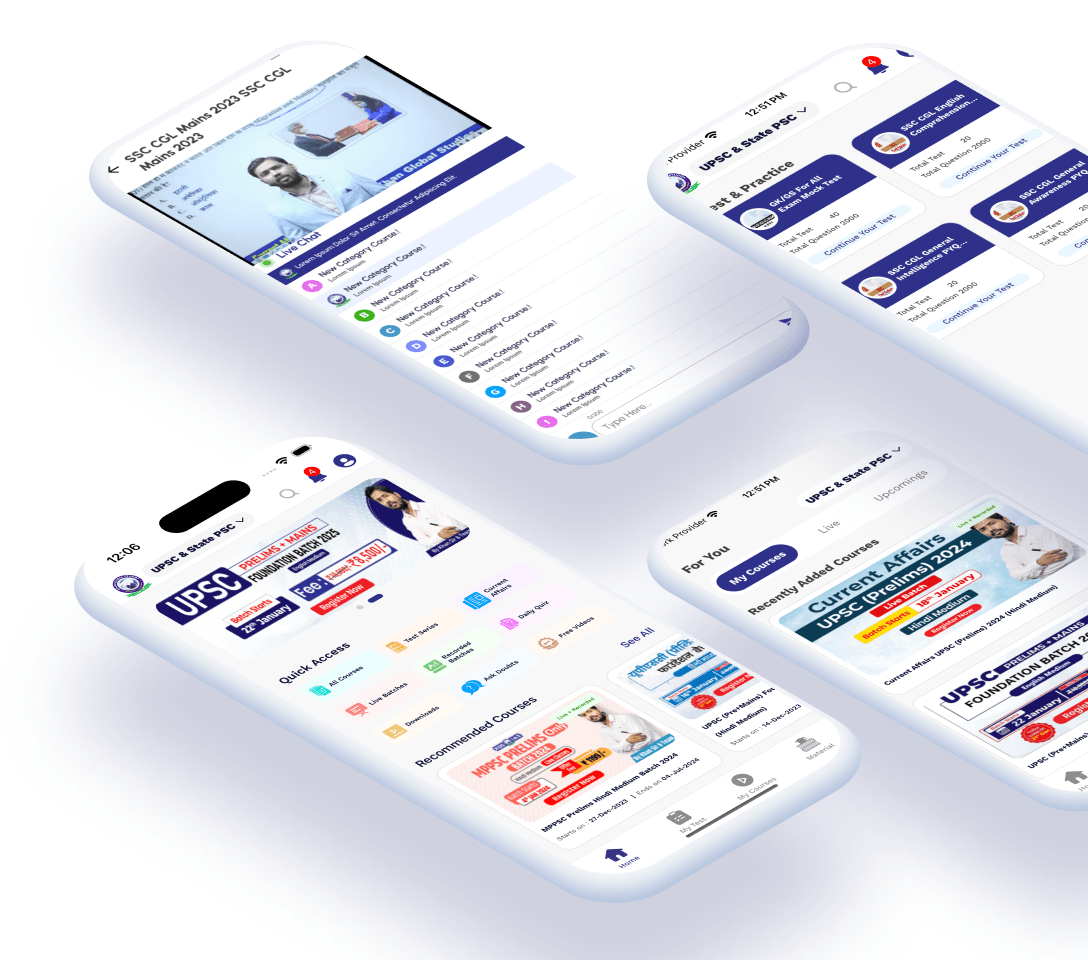
The most trusted learning platform on your phone
With our training programs, learning online can be a very exciting experience! Take the next step toward achieving your professional and personal objectives



Course Related Query:
Ask Your DoubtsStore Related Query:[email protected]NCERT Books
Resources
We love learning. Through our innovative solutions, we encourage ourselves, our teams, and our Students to grow. We welcome and look for diverse perspectives and opinions because they enhance our decisions. We strive to understand the big picture and how we contribute to the company’s objectives. We approach challenges with optimism and harness the power of teamwork to accomplish our goals. These aren’t just pretty words to post on the office wall. This is who we are. It’s how we work. And it’s how we approach every interaction with each other and our Students.
Come with an open mind, hungry to learn, and you’ll experience unmatched personal and professional growth, a world of different backgrounds and perspectives, and the freedom to be you—every day. We strive to build and sustain diverse teams and foster a culture of belonging. Creating an inclusive environment where every students feels welcome, appreciated, and heard gives us something to feel (really) good about.
Get Free academic Counseling & Course Details