You're all caught up—no notifications available.
Explore All Exams at KGS


All Exams
Explore All Exams at KGS

Khan Sir Courses
Geography I Polity I History | World Map I Indian Map I Economics I Biology

UPSC & State PSC
UPSC I BPSC I UP-PSC I MP-PSC

State Exams
UP I Bihar I MP | Rajasthan

NEET | JEE | CUET
NEET | JEE | CUET

Defence Exams
NDA I CDS I CAPF I AFCAT I SSB I Agniveer

Police Exams
UP SI | Bihar SI | Delhi Police | UP Constable

SSC Exams
CGL I CPO I CHSL I MTS I SSC GD I Delhi Police

Foundation Courses
Physics I Chemistry I Biology I History I Geography I Polity I NCERT I Math I English | Map I Reasoning

Railway Exams
RRB | RPF

Teaching Exams
TET | Teaching | UGC

Banking Exams
SBI | RBI | IBPS

Engineering Exams
Civil | Electrical | Mechanical
UGC NET
UGC NET/JRF
Current Affairs provides you with the best compilation of the Daily Current Affairs taking place across the globe: National, International, Sports, Science and Technology, Banking, Economy, Agreement, Appointments, Ranks, and Report and General Studies

SYLLABUS
GS-2: Important International institutions, agencies and fora- their structure, mandate.
Context: At the Inter-Governmental Negotiations (IGN) on reforms of the United Nations Security Council, India firmly opposed the creation of a “two-tier” system of permanent membership.
Outcome of the Inter-Governmental Negotiations (IGN)
• Rejection of New Category Without Veto: India rejected proposals to create a new category of permanent members without veto powers, warning that such a move would complicate negotiations and entrench inequality within the Council.
• Support for G4 Proposal: India supported the G4 proposal (India, Brazil, Germany, Japan), under which new permanent members would not exercise veto powers for 15 years, followed by a review.
• Comprehensive Reform Emphasis: India reiterated that meaningful reform must address both membership expansion and veto power simultaneously, as piecemeal approaches would fail to resolve structural distortions.
• Support for African Position: India backed the African demand that new permanent members should enjoy veto powers as long as the veto exists, highlighting concerns of historical injustice and unequal representation.
About the United Nations Security Council (UNSC)
• The United Nations Security Council is one of the principal organs of the United Nations and is primarily responsible for maintaining international peace and security.
• Originally consisting of 11 members, the Council was expanded to 15 members in 1965 through an amendment to the UN Charter, comprising 5 permanent members and 10 non-permanent members elected for two-year terms by the United Nations General Assembly.
• Each member has one vote, and all UN member states are obligated to comply with the decisions of the Security Council under the UN Charter.
• The Council determines the existence of threats to peace or acts of aggression and initially seeks peaceful resolution of disputes through dialogue and negotiation.
• It can impose diplomatic and economic sanctions, authorize peacekeeping operations, and, as a last resort, approve the use of military force to maintain or restore international peace and security.
• Any state, even if not a UN member, can bring a dispute before the Council for consideration.
• The Council has a rotating presidency that changes monthly and is supported by various subsidiary organs that assist in its functioning.
Need for UNSC Reform
• Outdated Structure: The United Nations Security Council was established in 1945 and does not reflect present-day geopolitical realities, with the only major reform in 1965 expanding non-permanent membership only.
• Imbalance in Power: The ratio of permanent to non-permanent members shifted from 5:6 to 5:10, increasing the relative power of veto-wielding members.
• Lack of Representation and Legitimacy: India identified two core problems—membership structure and veto system—arguing that the current system leads to a lack of representativeness and reduced credibility of the Council.
• Ineffective Veto Restraint Mechanisms: A 2022 United Nations General Assembly resolution mandates discussion after veto use, vetoes continue frequently, and are often driven by national interests.
• “Effective Veto” Beyond P5: Even non-permanent members informally exercise an “effective veto” by blocking press statements and sanctions decisions.
Challenges in UNSC Reform
• Deep Divisions Among Member States: Wide-ranging and conflicting views among member states make consensus on reform of the United Nations Security Council difficult.
• Veto Reform Paradox: Any limitation on veto requires amendment of the UN Charter and approval by existing veto holders.
• Institutional Resistance: Permanent members benefit from the status quo and therefore resist structural changes.
• Complexity of Reform Models: Proposals such as new membership categories add layers of negotiation and risk, further leading to deadlock.
• Ineffectiveness of Incremental Measures: Existing attempts to regulate veto use have not worked effectively.
Way Forward
• Shift to Result-Oriented Negotiations: Reform discussions must move beyond repetitive position statements towards convergence-driven negotiations to break the long-standing deadlock.
• Text-Based Negotiations: Initiating negotiations based on a consolidated draft text can provide a structured framework for resolving differences among member states.
• Minimum Consensus Approach: Instead of seeking complete agreement, efforts should focus on building convergence on broadly accepted aspects while deferring contentious issues for phased resolution.
• Phased Reform Strategy: Given the difficulty of immediate veto reform, a gradual and pragmatic approach can help advance reform without abandoning the principle of equality.
• Coalition Building: Strengthening alliances among developing countries, African nations, and emerging powers can create collective pressure for meaningful reform.
• Aligning with Contemporary Realities: Reform must ensure that the UNSC reflects current geopolitical and developmental realities to enhance its legitimacy and effectiveness.
Sources:
DD News
PTI News
Business World
UN
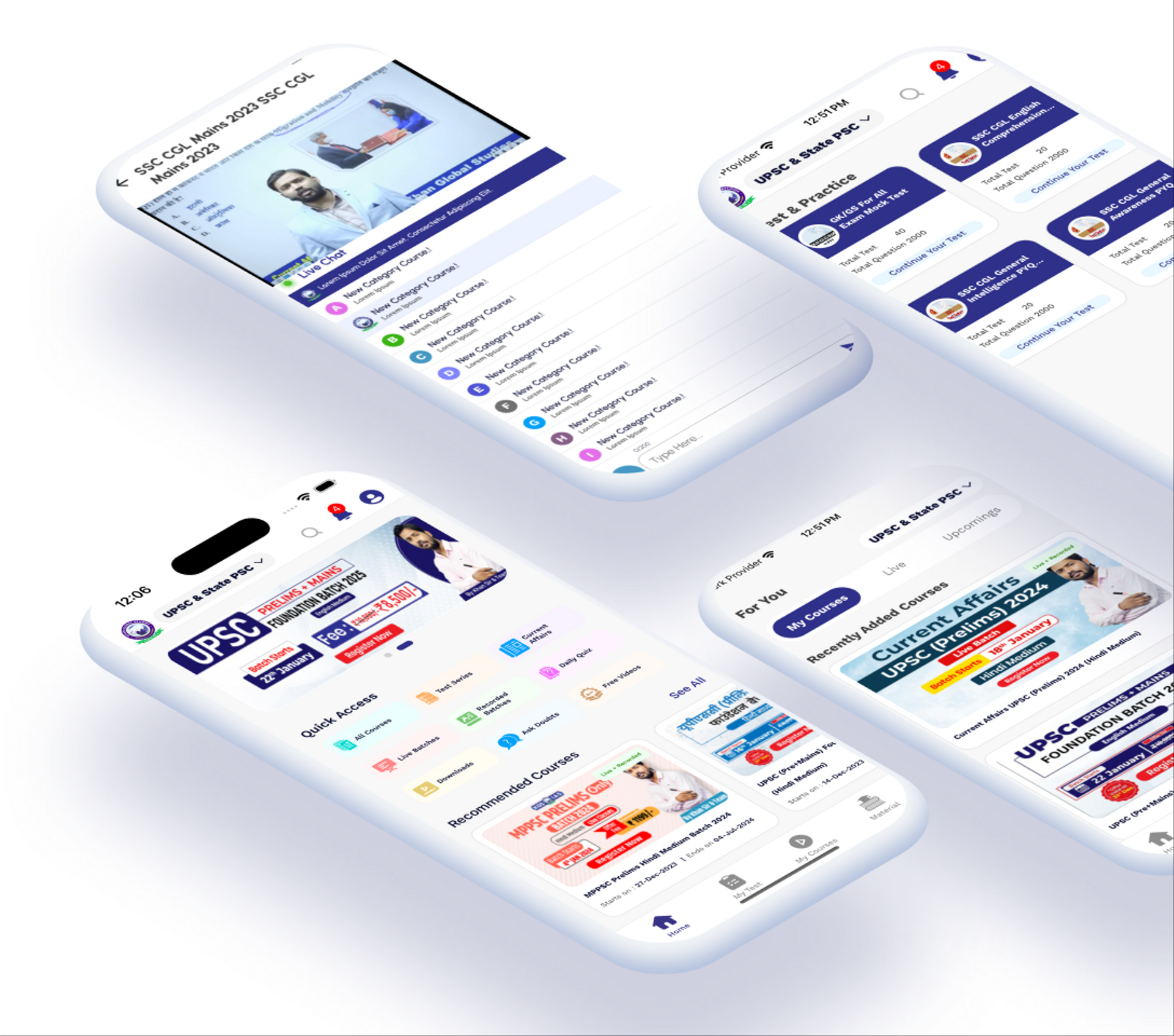
The most trusted learning platform on your phone
With our training programs, learning online can be a very exciting experience! Take the next step toward achieving your professional and personal objectives


Course Related Query:
Ask Your DoubtsStore Related Query:[email protected]NCERT Books
Resources
We love learning. Through our innovative solutions, we encourage ourselves, our teams, and our Students to grow. We welcome and look for diverse perspectives and opinions because they enhance our decisions. We strive to understand the big picture and how we contribute to the company’s objectives. We approach challenges with optimism and harness the power of teamwork to accomplish our goals. These aren’t just pretty words to post on the office wall. This is who we are. It’s how we work. And it’s how we approach every interaction with each other and our Students.
Come with an open mind, hungry to learn, and you’ll experience unmatched personal and professional growth, a world of different backgrounds and perspectives, and the freedom to be you—every day. We strive to build and sustain diverse teams and foster a culture of belonging. Creating an inclusive environment where every students feels welcome, appreciated, and heard gives us something to feel (really) good about.
Get Free academic Counseling & Course Details