Current Affairs provides you with the best compilation of the Daily Current Affairs taking place across the globe: National, International, Sports, Science and Technology, Banking, Economy, Agreement, Appointments, Ranks, and Report and General Studies
NEWS IN SHORT
Bureau of Port Security (BoPS)
Context: The Union Government has decided to set up a dedicated statutory body called the Bureau of Port Security (BoPS) to oversee the security of vessels and port facilities in the country.
The Bureau of Port Security (BoPS) will be constituted as a statutory body under Section 13 of the Merchant Shipping Act, 2025.
It will be headed by a Director General (IPS officer) and will function under the Ministry of Ports, Shipping and Waterways (MoPSW).
During the one-year transition period, the Director General of Shipping (DGS/DGMA) shall function as the Director General, BoPS.
The Bureau will be responsible for regulatory and oversight functions relating to the security of ships and port facilities.
It will also ensure timely analysis, collection and exchange of security-related information, with a special focus on cybersecurity, including a dedicated division to safeguard port IT infrastructure from digital threats.
The Bureau is being modelled on the lines of the Bureau of Civil Aviation Security (BCAS).
BCAS was established in January 1978 on the recommendations of the Pande Committee and originated from the Directorate of Civil Aviation Security (DCAS) within the Directorate General of Civil Aviation (DGCA).
Earlier, the Central Industrial Security Force (CISF) was designated as a Recognised Security Organisation (RSO) to conduct port security assessments and preparation of security plans for ports.
CISF is one of the specialised Central Paramilitary Forces of India under the Ministry of Home Affairs.
It was established in the year 1969 under the CISF Act, 1968, to provide security to Public Sector Undertakings (PSUs) and Government Installations.
National Project for Strengthening Community-Based Disaster Risk Reduction
Context: Recently, A High-Level Committee (HLC), under the chairmanship of the Union Home Minister, approved funds for the National Project for Strengthening Community-Based Disaster Risk Reduction Initiatives.
About the National Project for Strengthening Community-Based DRR
The initiative is in collaboration with the Ministry of Panchayati Raj and the National Disaster Management Authority (NDMA).
The project will be implemented across 20 States and will cover 81 disaster-prone districts with 20 Gram Panchayats each, while additionally also developing 20 Gram Panchayats focused on major hazard-specific risks as replicable models for local-level Disaster Risk Reduction (DRR).
DDR is aimed at preventing new disasters and reducing existing disaster risk and managing residual risk, all of which contribute to strengthening resilience and therefore to the achievement of sustainable development.
This initiative aims at integrating DRR practices into the Governance structure through a bottom-up approach to disaster management.
The project focuses on strengthening institutions, integrating DRR into PRI development planning, and building capacity and awareness among State Disaster Management Authorities (SDMAs), District Disaster Management Authorities (DDMAs), and Panchayat representatives, supported by targeted Information, Education and Communication (IEC) initiatives.
The program introduces an innovative concept of Model Gram Panchayats(GPs), with one per state for six hazard-specific themes, to implement long-term disaster mitigation.
Learnings from these 20 GPs can be scaled through SDMFs to replicate disaster-resilient models in other GPs.
50% Reservation for ex-Agniveers in CAPFs
Context: Recently, the Union Home Ministry has decided to enhance reservation for ex-Agniveers in the Group C posts of the Central Armed Police Forces (CAPFs) from the existing 10% to 50%.
More on the News
The Ministry announced the change in policy with the notification of reservation of 50% constable posts in the Border Security Force (BSF), and will enhance reservation in Group C posts for ex-Agniveers in other CAPFs as well in the coming days.
Presently, ex-Agniveers are exempt from the Physical Standard Test (PST) and Physical Efficiency Test (PET) but have to appear in the written exam, like other candidates.
The inaugural Agniveer batch becomes eligible for CAPF recruitment upon tenure completion in 2026.
About Agnipath Scheme
AGNIPATH Scheme was launched on June 15, 2022, to recruit both male and female aspirants into ‘below the officer’s rank’ cadre of the three services for a period of four years as Agniveers.
After four years, up to 25% of Agniveers may be selected for regular cadre positions, and the remaining Agniveers return to society as disciplined, skilled, and motivated individuals, ready for employment in other sectors.
Each Agniveer receives a tax-free, one-time Seva Nidhi package of around ₹11.71 lakh after four years.
Based on organisational needs and policies, Agniveers may apply for permanent enrolment in the Armed Forces.
About Central Armed Police Forces (CAPFs)
Central Armed Police Forces (CAPFs) is the collective nomenclature for seven security organizations, namely, the Assam Rifles (AR), Border Security Force (BSF), Central Industrial Security Force (CISF), Central Reserve Police Force (CRPF), Indo Tibetan Border Police (ITBP), National Security Guard (NSG) and Sashastra Seema Bal (SSB).
These all function under the administrative control of the Ministry of Home Affairs, New Delhi.
Each CAPF is led by a Director General (DG), an IPS officer of DGP-equivalent rank.
PM Surya Ghar: Muft Bijli Yojana
Context: Recently, the Union Minister of State for New and Renewable Energy, in a written statement to the Rajya Sabha, stated that the PM Surya Ghar: Muft Bijli Yojana has delivered zero electricity bills to over 7.7 lakh households.
More on the News
As of 9 December 2025, around 19.45 lakh rooftop solar systems have been installed nationwide, benefiting approximately 24.35 lakh households.
According to data shared by the ministry, Gujarat has emerged as the leading state under the scheme, with over 4.93 lakh rooftop solar installations benefitting more than 7.10 lakh households.
Notably, over 3.62 lakh consumers in the state are now receiving zero electricity bills.
Andhra Pradesh, Assam and Haryana have also shown steady progress, with thousands of households benefiting from rooftop solar systems.
About PM Surya Ghar: Muft Bijli Yojana
The PM Surya Ghar: Muft Bijli Yojana was launched in February 2024 with the objective of installing rooftop solar systems in one crore residential households by FY 2026–27, supported by a total outlay of ₹75,021 crore.
The scheme aims to provide up to 300 units of free electricity per month to households through subsidised rooftop solar installations.
Central Financial Assistance (CFA) is provided directly to beneficiaries through DBT, reducing upfront installation costs.
The Scheme is implemented under the Ministry of New and Renewable Energy (MNRE).
Apache Attack Helicopters
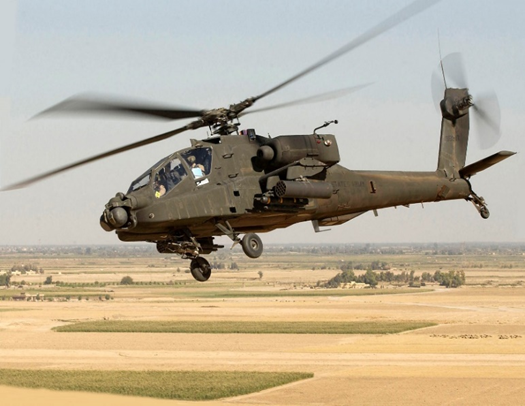
Context: Recently, the Indian Army received the final batch of three AH-64E Apache attack helicopters, completing its six-unit fleet at the 451 Army Aviation Squadron based in Jodhpur, Rajasthan.
More on the News
This delivery follows the earlier induction of three Apache helicopters received in July, after delays from the originally planned timeline.
This induction has been described by the Indian Army as a milestone achievement that will significantly bolster its operational capabilities.
The six Apache helicopters were procured under a $600 million government-to-government agreement signed with the United States in February 2020.
Apache Attack Helicopters
The AH-64E Apache, manufactured by Boeing, is the most advanced variant of the Apache helicopter, optimised for modern multi-domain combat environments.
This platform is capable of carrying Hellfire air-to-ground missiles, Hydra rockets, Stinger air-to-air missiles and a 30 millimetre chain gun.
This helicopter is equipped with the Longbow fire control radar, providing 360-degree coverage and enhanced target detection in all weather and night conditions.
This aircraft integrates advanced sensors, upgraded software and improved weapons performance under the AH-64E Version 6 configuration.
This helicopter is designed for interoperability and joint operations, enabling seamless coordination with other armed forces platforms.
With our training programs, learning online can be a very exciting experience! Take the next step toward achieving your professional and personal objectives
We love learning. Through our innovative solutions, we encourage ourselves, our teams, and our Students to grow. We welcome and look for diverse perspectives and opinions because they enhance our decisions. We strive to understand the big picture and how we contribute to the company’s objectives. We approach challenges with optimism and harness the power of teamwork to accomplish our goals. These aren’t just pretty words to post on the office wall. This is who we are. It’s how we work. And it’s how we approach every interaction with each other and our Students.
What Makes Us Different
Come with an open mind, hungry to learn, and you’ll experience unmatched personal and professional growth, a world of different backgrounds and perspectives, and the freedom to be you—every day. We strive to build and sustain diverse teams and foster a culture of belonging. Creating an inclusive environment where every students feels welcome, appreciated, and heard gives us something to feel (really) good about.