You're all caught up—no notifications available.
Explore All Exams at KGS


All Exams
Explore All Exams at KGS

Khan Sir Courses
Geography I Polity I History | World Map I Indian Map I Economics I Biology

UPSC & State PSC
UPSC I BPSC I UP-PSC I MP-PSC

State Exams
UP I Bihar I MP | Rajasthan

NEET | JEE | CUET
NEET | JEE | CUET

Defence Exams
NDA I CDS I CAPF I AFCAT I SSB I Agniveer

Police Exams
UP SI | Bihar SI | Delhi Police | UP Constable

SSC Exams
CGL I CPO I CHSL I MTS I SSC GD I Delhi Police

Foundation Courses
Physics I Chemistry I Biology I History I Geography I Polity I NCERT I Math I English | Map I Reasoning

Railway Exams
RRB | RPF

Teaching Exams
TET | Teaching | UGC

Banking Exams
SBI | RBI | IBPS

Engineering Exams
Civil | Electrical | Mechanical
UGC NET
UGC NET/JRF
Current Affairs provides you with the best compilation of the Daily Current Affairs taking place across the globe: National, International, Sports, Science and Technology, Banking, Economy, Agreement, Appointments, Ranks, and Report and General Studies

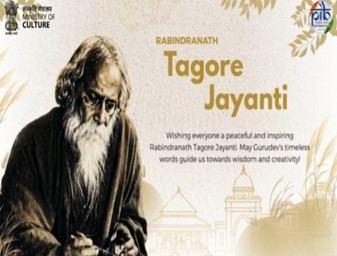
165th Birth Anniversary of Rabindranath Tagore
Context: Indian Prime Minister paid heartfelt tributes to Rabindranath Tagore on the occasion of Pochishe Boishakh, marking the 165th birth anniversary of the Nobel laureate poet, while India and Bangladesh observed the day through cultural programmes and commemorative events.
About Rabindranath Tagore
• Rabindranath Tagore was born on May 7, 1861, at Jorasanko Thakur Bari in Kolkata.
• He was a poet, novelist, playwright, essayist, composer, philosopher, educationist and painter who transformed Bengali literature through modern prose, new verse forms, and the use of colloquial language.
• His major literary works include Manasi, Sonar Tari, Gora, Chokher Bali, Shesher Kobita and Ghare-Baire.
• His experiences in East Bengal, particularly along the Padma River, deeply influenced his writings on rural life and human emotions.
• His collection Gitanjali earned him the Nobel Prize in Literature in 1913, making him the first Asian and first non-European Nobel laureate in literature.
• In 1901, Tagore founded an experimental school at Shantiniketan, which later became Visva-Bharati University in 1921.
• He was knighted in 1915 but renounced the title in 1919 in protest against the Jallianwala Bagh Massacre.
Legacy of Tagore
• Tagore’s philosophy of peace, universal humanism and cultural harmony continues to inspire generations across South Asia.
• His songs, collectively known as Rabindra Sangeet, remain central to Bengali cultural identity.
• He is uniquely credited with authoring the national anthems of both India (“Jana Gana Mana”) and Bangladesh (“Amar Sonar Bangla”).
• His contributions to literature, education, music and art continue to shape cultural and intellectual traditions worldwide.
Birth Anniversary of Maharana Pratap
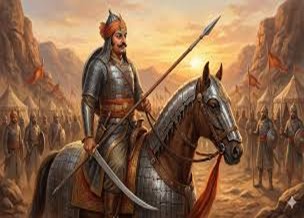
Context: The Indian Prime Minister paid tribute to the legendary Rajput ruler Maharana Pratap on his birth anniversary, remembering his unparalleled courage, patriotism, and commitment to protecting the honour of Mewar and the motherland.
About Maharana Pratap
• Maharana Pratap was born on May 9, 1540, at Kumbhalgarh Fort in Rajasthan to Maharana Udai Singh II and Maharani Jaiwanta Bai of the Sisodiya Rajput clan, the rulers of Mewar.
• Despite succession disputes, the nobles of Mewar crowned him ruler in 1572 because of his bravery, leadership, and strong Rajput character.
• During a period of rapid Mughal expansion under Emperor Akbar, Maharana Pratap firmly refused to accept Mughal supremacy or become a subordinate ruler.
• His resistance led to the famous Battle of Haldighati (1576) against Mughal forces led by Raja Man Singh.
• Though the battle remained inconclusive, Maharana Pratap continued his struggle from the Aravalli hills using guerrilla warfare and swift cavalry tactics with crucial support from the Bhil tribal community.
• He later regained several parts of Mewar, including success in the Battle of Dewair (1582).
Legacy
• Maharana Pratap is remembered as one of India’s greatest warrior kings and a timeless symbol of freedom, courage, and unwavering self-respect.
• His loyal horse Chetak, who saved him despite being fatally wounded during the Battle of Haldighati, became legendary in Indian folklore.
• The sacrifice of Jhala Maan and the support of the Bhils also remain integral to his story.
• British historian Colonel James Tod famously described him as the “Leonidas of Rajasthan” for his indomitable spirit and resistance against overwhelming odds.
• His life continues to inspire generations with ideals of patriotism, sacrifice, integrity, and devotion to the motherland.
Lt Gen N.S. Raja Subramani Appointed as India’s Next CDS
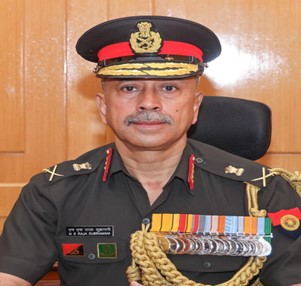
Context: The Union Government has appointed Lieutenant General N. S. Raja Subramani (Retd) as the next Chief of Defence Staff (CDS) and Secretary, Department of Military Affairs (DMA), succeeding General Anil Chauhan after his tenure ends on May 30, 2026.
More on the News
• Lt Gen Raja Subramani is currently serving as Military Adviser in the National Security Council Secretariat (NSCS) under National Security Advisor Ajit Doval since September 2025.
• He earlier served as Vice Chief of the Army Staff and General Officer Commanding-in-Chief of Central Command.
• Commissioned into the 8th Battalion of the Garhwal Rifles in December 1985, he has over four decades of operational, command, instructional, and staff experience, including counter-insurgency operations in Assam under Operation Rhino and command of the Indian Army’s premier strike formation, 2 Corps, on the Western Front.
• For his distinguished service, he has been awarded the Param Vishisht Seva Medal (PVSM), Ati Vishisht Seva Medal (AVSM), Sena Medal (SM), and Vishisht Seva Medal (VSM).
About the Chief of Defence Staff (CDS)
• The post of CDS was created in December 2019 following long-pending recommendations of the 1999 Kargil Review Committee and the subsequent Group of Ministers (GoM) report of 2001.
• The CDS acts as the Permanent Chairman of the Chiefs of Staff Committee (COSC) and serves as the Principal Military Adviser to the Defence Minister on tri-service matters.
• The CDS also functions as Secretary of the Department of Military Affairs (DMA), created within the Ministry of Defence in 2019 to promote greater civil-military integration and jointness among the armed forces.
• The office of CDS aims to enhance coordination among the Army, Navy and Air Force through integrated planning, joint logistics, theatre commands, modernisation, and indigenous defence procurement.
• General Bipin Rawat became India’s first CDS on December 31, 2019.
DRDO Achieves 1,200-Second Scramjet Test Milestone
Context: Recently, the Defence Research and Development Organisation (DRDO) successfully conducted a long-duration test of its Actively Cooled Full-Scale Scramjet Combustor at the Scramjet Connect Pipe Test (SCPT) facility in Hyderabad, marking a major advancement in India’s hypersonic cruise missile programme.
Key Highlights of the Test
• The test was conducted at the Defence Research and Development Laboratory (DRDL), Hyderabad.
• During the trial, the scramjet combustor achieved a continuous runtime of over 1,200 seconds, surpassing the earlier 700-second test conducted in January 2026.
• The successful ground test validated the design of the advanced actively cooled scramjet combustor and demonstrated the capability of the SCPT facility for long-duration hypersonic testing.
About Scramjet Technology
• The scramjet engine is a critical technology for hypersonic cruise missiles capable of travelling at speeds above Mach 5 (over 6,100 km per hour).
• It uses supersonic combustion in an air-breathing engine to sustain high-speed flight for extended durations.
• The combustor incorporates an advanced flame stabilisation technique that maintains continuous combustion at air speeds exceeding 1.5 km per second.
Indigenous Technologies Developed
• The test validated an indigenously developed liquid hydrocarbon endothermic fuel jointly developed by DRDL and industry partners.
• The fuel provides enhanced cooling and easier ignition during hypersonic flight.
• Another major achievement is the development of an advanced ceramic Thermal Barrier Coating (TBC) by DRDL and Department of Science and Technology (DST) facilities, capable of withstanding extreme hypersonic temperatures.
• Defence Minister Rajnath Singh described the achievement as a strong foundation for India’s Hypersonic Cruise Missile Development Programme.
ICMR-ICAR Launches ‘SEHAT’ to Strengthen Agriculture-Nutrition-Health Convergence
Context: The Indian Council of Medical Research (ICMR) and the Indian Council of Agricultural Research (ICAR) have jointly launched a national programme to integrate agriculture, nutrition and public health so that agricultural advances translate into improved health outcomes.
About SEHAT
• SEHAT (Science Excellence for Health through Agricultural Transformation) is a mission-mode initiative to strategically align agricultural research and innovation with national priorities in nutrition, preventive and promotive healthcare, non-communicable diseases (NCDs), farmer well-being, and the One Health approach.
• It seeks to promote a transition from a predominantly curative healthcare approach toward a preventive and nutrition-sensitive public health framework through convergence between agriculture, health research, and policy systems.
• Under the programme, nutrient-rich and biofortified crop varieties developed by ICAR will undergo clinical and nutritional validation through ICMR to assess their impact on dietary improvement and public health.
• The programme also aims to support evidence-based policymaking, strengthen nutrition security, and encourage healthier dietary practices by linking agriculture directly with health outcomes.
• The mission focuses on five priority areas of national significance:
About the Indian Council of Medical Research (ICMR)
• ICMR is India’s apex body for the formulation, coordination, and promotion of biomedical research.
• Established in 1911 as the Indian Research Fund Association, it was renamed in 1949 and functions under the Department of Health Research, Ministry of Health and Family Welfare.
About the Indian Council of Agricultural Research (ICAR)
• ICAR is the apex national institution for coordinating agricultural education and research in India.
• Established in 1929, it functions under the Department of Agricultural Research and Education (DARE), Ministry of Agriculture and Farmers Welfare.
India’s GCC Revenue to Hit USD 98.4 Billion by FY26E
Context: A recent report by NASSCOM and Zinnov projected that India’s Global Capability Centre (GCC) ecosystem is expected to generate nearly USD 98.4 billion in revenue by FY26E, reflecting the country’s growing role as a global technology and innovation hub.
Key Highlights of the Report
• The report titled “GCC Value Orbit: From Delivery Engine to Enterprise Nerve Centre” highlights that India now hosts 2117 GCCs employing nearly 2.36 million professionals, marking a 32% growth in the number of centers since fiscal year 2021.
• According to the report, nearly 506 of the Forbes Global 2000 companies currently maintain operations in India.
• The report observed that India’s GCC ecosystem is evolving from traditional back-office and support operations into strategic centres handling software engineering, artificial intelligence (AI), product development, finance, and research & development (R&D).
• Artificial Intelligence has emerged as a key growth driver, with over 1,200 GCCs integrating AI and machine learning capabilities, supported by around 250,000 specialised professionals and nearly 250 dedicated Centres of Excellence.
About Global Capability Centres (GCCs)
• GCCs are strategic, wholly-owned offshore units established by multinational corporations (MNCs) to manage and support global business functions from a centralised location.
• GCCs were originally set up in cost-effective locations to handle back-office functions and reduce operational costs. Today, GCCs are strategic assets that serve as innovation hubs and centres of excellence.
• GCCs are increasingly focusing on high-value functions such as R&D, engineering, product development, and complex business operations by leveraging advanced technologies, including AI, machine learning, and cloud computing.
• India has emerged as one of the world’s leading GCC destinations due to a large skilled workforce, strong digital infrastructure, cost competitiveness, and a growing AI-ready talent base.

The most trusted learning platform on your phone
With our training programs, learning online can be a very exciting experience! Take the next step toward achieving your professional and personal objectives


Course Related Query:
Ask Your DoubtsStore Related Query:[email protected]NCERT Books
Resources
We love learning. Through our innovative solutions, we encourage ourselves, our teams, and our Students to grow. We welcome and look for diverse perspectives and opinions because they enhance our decisions. We strive to understand the big picture and how we contribute to the company’s objectives. We approach challenges with optimism and harness the power of teamwork to accomplish our goals. These aren’t just pretty words to post on the office wall. This is who we are. It’s how we work. And it’s how we approach every interaction with each other and our Students.
Come with an open mind, hungry to learn, and you’ll experience unmatched personal and professional growth, a world of different backgrounds and perspectives, and the freedom to be you—every day. We strive to build and sustain diverse teams and foster a culture of belonging. Creating an inclusive environment where every students feels welcome, appreciated, and heard gives us something to feel (really) good about.
Get Free academic Counseling & Course Details