KGS

All Exams

Explore All Exams at KGS

All Exams
Current Affairs made simple.

Current Affairs provides you with the best compilation of the Daily Current Affairs taking place across the globe: National, International, Sports, Science and Technology, Banking, Economy, Agreement, Appointments, Ranks, and Report and General Studies

Current Affairs

PMAY-G: Housing Push in Bihar

Context: The Union government has approved 11,18,937 new pucca houses for Bihar under the Pradhan Mantri Awaas Yojana–Gramin (PMAY-G) for FY 2026–27. The programme carries an allocation of ₹13,427 crore, announced in Patna by Union Minister for Rural Development Shivraj Singh Chouhan.

Bihar Allocation
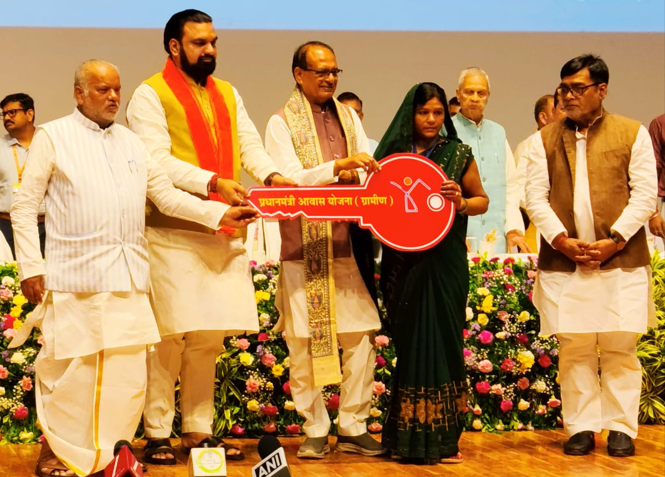
  • The sanction letter for the allocation was handed over to Chief Minister Samrat Choudhary at a State-level Griha Pravesh programme in Patna.
  • Keys were handed to beneficiaries of 2.35 lakh PMAY-G houses completed in the current financial year.
  • Bihar received approval for 5.20 lakh houses in 2025–26, with an allocation of ₹6,249 crore.
  • The new target of 11.18 lakh houses marks a major scaling up of rural housing support in the State.

About PMAY-G

  • PMAY-G is a centrally sponsored rural-housing scheme of the Ministry of Rural Development. It aims to provide a pucca house with basic amenities to eligible rural households that are houseless or living in kutcha or dilapidated houses.

Key Features

  • Target Beneficiaries: Houseless households and households living in zero-, one- or two-room kutcha/dilapidated houses.
  • Beneficiary Selection: Based on housing-deprivation parameters in SECC 2011 data, verified by the Gram Sabha.
  • House Size: Minimum 25 sq. metres, including a dedicated hygienic cooking area.
  • Unit Assistance:
    • ₹1.20 lakh in plain areas.
    • ₹1.30 lakh in hilly, difficult and Integrated Action Plan areas.
  • Funds Transfer: Through Direct Benefit Transfer (DBT) to beneficiaries’ bank accounts.
  • Sanitation Convergence: ₹12,000 support for toilet construction through the Swachh Bharat Mission.

Supreme Court Revisits “Industry” Definition

Context:  On 20 August 2026, a nine-judge Constitution Bench of the Supreme Court held that the broad, worker-oriented definition of “industry” evolved in the 1978 Bangalore Water Supply and Sewerage Board v. A. Rajappa judgment will not govern interpretation under the Industrial Relations Code, 2020.

The 1978 Position

  • Section 2(j) of the Industrial Disputes Act, 1947 defined “industry”. In Bangalore Water Supply, the Supreme Court adopted an expansive interpretation through the triple test.
  • An activity was generally an industry if it involved:
    • Systematic activity;
    • Cooperation between employer and employee; and
    • Production or distribution of goods or services aimed at satisfying human wants and wishes.
  • Under this approach, profit motive was not essential. Hospitals, educational institutions, municipal bodies and other organised service activities could fall within “industry”, while core sovereign functions such as the judiciary, armed forces, police, legislative functions and law-and-order functions were excluded.

Current Supreme Court Ruling – Key Points

  • The court ruled that the original 1978 triple test will continue to govern all pending disputes under the Industrial Disputes Act, 1947. However, the new "refined" test formulated by this bench will apply prospectively to future cases.
  • Industrial Relations Code, 2020: Must be interpreted independently. The 1978 judgment does not constitute a binding interpretative framework for the Code.
  • Prior Concluded Cases: Cases that have already been finally concluded remain undisturbed.
  • The Court held that the earlier doctrine requires refinement because it had extended labour-law protection to a very wide range of establishments. However, it did not erase the 1978 ruling for pending cases under the repealed Industrial Disputes Act.

India–Japan Maritime Security Cooperation

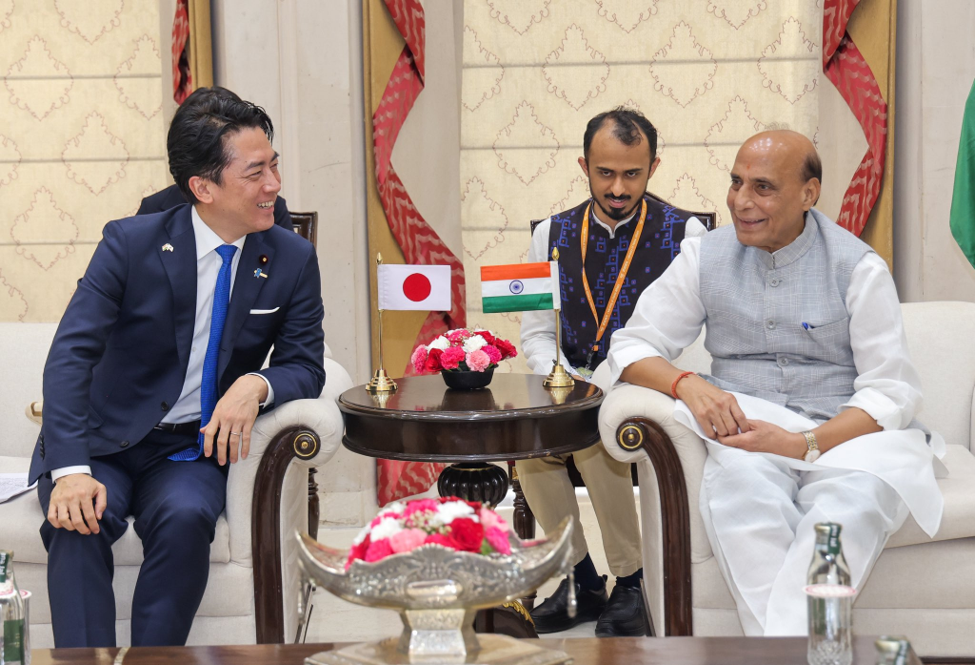
Context:  India and Japan signed a Memorandum of Arrangement (MoA) on Maritime Security Cooperation in New Delhi on 20 August 2026, following talks between Defence Minister Rajnath Singh and Japanese Defence Minister Shinjiro Koizumi.
Key Areas of Cooperation

  • Maritime Domain Awareness (MDA): Information sharing.
  • Sea Lines of Communication (SLOCs): Protection of vital shipping routes.
  • Naval Operations: Ship visits, joint exercises and personnel exchanges.
  • Logistics: Port access, maintenance and repair support.
  • Humanitarian Missions: Search & Rescue (SAR) and HADR.
  • Special Operations: Special Forces exchanges and cooperation with integrated theatre commands.

Defence Technology Cooperation

  • DRDO–ATLA: Cooperation in advanced defence technologies.
  • UNICORN: Identified as an early joint defence-equipment project.
  • Joint Shipbuilding: Explore naval ship design and construction under Make in India.
  • Shipyards: Reciprocal use for repair and maintenance.

Military Exercises

  • Dharma Guardian: India–Japan Army exercise.
  • JIMEX: India–Japan Maritime/Navy exercise.
  • Veer Guardian: India–Japan Air Force exercise.
  • 2026 Veer Guardian: Japanese fighter aircraft to participate in India for the first time.

Khan Global Studies App

The most trusted learning platform on your phone

With our training programs, learning online can be a very exciting experience. Take the next step toward achieving your professional and personal objectives.


Download on the App StoreGet it on Google Play
KGS learning dashboard and mobile application
logo
Khan Global Studies Pvt. Ltd. 5th Floor,
A13A, Graphix 1 Tower B, Sector 62,
Noida, Uttar Pradesh 201309

Course Related Query:

Ask Your DoubtsStore Related Query:[email protected]

Get Free Academic Counseling & Course Details

KGS best learning platform

About Khan Global Studies

We love learning. Through our innovative solutions, we encourage ourselves, our teams, and our Students to grow. We welcome and look for diverse perspectives and opinions because they enhance our decisions. We strive to understand the big picture and how we contribute to the company’s objectives. We approach challenges with optimism and harness the power of teamwork to accomplish our goals. These aren’t just pretty words to post on the office wall. This is who we are. It’s how we work. And it’s how we approach every interaction with each other and our Students.


What Makes Us Different

Come with an open mind, hungry to learn, and you’ll experience unmatched personal and professional growth, a world of different backgrounds and perspectives, and the freedom to be you—every day. We strive to build and sustain diverse teams and foster a culture of belonging. Creating an inclusive environment where every students feels welcome, appreciated, and heard gives us something to feel (really) good about.

©Copyright 2026 KhanGlobalStudies