Explore All Exams at KGS


All Exams
Explore All Exams at KGS

Khan Sir Courses
Geography I Polity I History | World Map I Indian Map I Economics I Biology

UPSC & State PSC
UPSC I BPSC I UP-PSC I MP-PSC

State Exams
UP I Bihar I MP | Rajasthan

NEET | JEE | CUET
NEET | JEE | CUET

Defence Exams
NDA I CDS I CAPF I AFCAT I SSB I Agniveer

Police Exams
UP SI | Bihar SI | Delhi Police | UP Constable

SSC Exams
CGL I CPO I CHSL I MTS I SSC GD I Delhi Police

Foundation Courses
Physics I Chemistry I Biology I History I Geography I Polity I NCERT I Math I English | Map I Reasoning

Railway Exams
RRB | RPF

Teaching Exams
TET | Teaching | UGC

Banking Exams
SBI | RBI | IBPS

Engineering Exams
Civil | Electrical | Mechanical
UGC NET
UGC NET/JRF
Current Affairs provides you with the best compilation of the Daily Current Affairs taking place across the globe: National, International, Sports, Science and Technology, Banking, Economy, Agreement, Appointments, Ranks, and Report and General Studies

Current Affairs
COSPAR Vikram Sarabhai Medal–2026
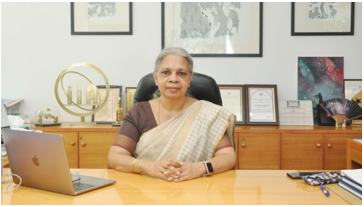
Context: Astrophysicist Annapurni Subramaniam has been awarded the COSPAR Vikram Sarabhai Medal–2026 for her outstanding contributions to space research, becoming the first Indian woman scientist to receive this honour.
More on the News
• The award was presented during the 46th COSPAR Scientific Assembly held in Florence, Italy.
• She is only the fourth Indian to receive the medal, after U.R. Rao (1996), Gurbax Singh Lakhina (2014) and Anil Bharadwaj (2024).
• She is also the first Indian woman scientist and only the third woman globally to receive this distinction.
• She served as the calibration scientist for the Ultra-violet Imaging Telescope (UVIT) aboard AstroSat, India's first space-based telescope launched in 2015, and is associated with the Thirty Metre Telescope (TMT) international project.
About the Vikram Sarabhai Medal
• It is an international award jointly instituted by the Committee on Space Research (COSPAR) and the Indian Space Research Organisation (ISRO) in honour of Dr. Vikram Sarabhai, the founder of India's space programme and ISRO.
• Constituted in 1990, the medal recognises outstanding contributions to space research in developing countries.
• It is open to candidates from any country, provided their relevant work has been carried out mainly during the five-year period ending one year before the COSPAR Scientific Assembly at which the medal is presented.
About the Committee on Space Research (COSPAR)
• It is an international scientific body established in 1958, shortly after the launch of the world's first artificial satellite by the Soviet Union in 1957.
• It functions under the International Science Council (ISC) and is associated with the United Nations Committee on the Peaceful Uses of Outer Space (UN-COPUOS).
• COSPAR is one of the world's largest forums for space scientists and organises its Scientific Assembly every two years, bringing together nearly 3,000 scientists from across the globe to promote international cooperation and advance space research.
Supreme Court Directs Comprehensive Measures to Curb ‘Digital Arrest’ Scams
Context: The Supreme Court has directed the Centre, States, the Reserve Bank of India (RBI) and telecom authorities to prepare Standard Operating Procedures (SOPs) to curb ‘digital arrest’ scams, strengthen grievance redressal, initiate criminal action through e-Zero FIRs and ensure time-bound restoration of money lost by victims.
Key Highlights
• Declining Complaints: As per the fourth status report of the Indian Cyber Crime Coordination Centre (I4C), complaints against digital arrest scams declined from 1,23,672 in 2024 to 58,249 in 2025, and further to 16,377 up to June 30, 2026.
• Recovery Mechanism: A data-sharing MoU between the Reserve Bank Innovation Hub and I4C was executed.
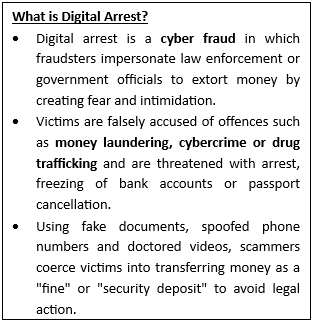
• Supreme Court Directions: The RBI has been directed to issue, within four weeks, an SOP for banks to place temporary debit holds on mule accounts linked to money laundering and cyber-enabled fraud.
• Investigation: The CBI has registered 10 digital arrest cases.
RBI Monetary Policy Committee Keeps Repo Rate Unchanged
Context: The Reserve Bank of India's (RBI) Monetary Policy Committee (MPC), in its third bi-monthly monetary policy meeting, unanimously decided to keep the policy repo rate unchanged at 5.25% while retaining a neutral policy stance.
More on the News
• After assessing evolving domestic and global macroeconomic conditions, the MPC unanimously decided to maintain the repo rate at 5.25% under the Liquidity Adjustment Facility (LAF).
• Consequently, the Standing Deposit Facility (SDF) rate remains at 5.0%, while the Marginal Standing Facility (MSF) rate and the Bank Rate continue at 5.50%.
• The RBI revised its FY 2026–27 real GDP growth projection upward to 6.7% (from 6.6%), while lowering the CPI inflation forecast to 5.0% (from 5.1%), reflecting confidence in domestic growth but caution over inflationary risks.
Factors Influencing the Decision
• Resilient Growth: Strong domestic demand, supported by robust private consumption, investment, construction activity, bank credit, and improving exports, kept the growth outlook positive.
• Moderate Inflation: CPI inflation rose to 4.4% in June 2026 due to food and fuel prices, but core inflation remained contained, indicating limited demand-driven pressures.
• Rising Uncertainties: Risks from El Niño, an uneven monsoon, elevated energy prices, geopolitical tensions, supply-chain disruptions, and global trade policy continue to cloud the outlook.
• Wait-and-Watch Approach: As inflationary pressures remain largely supply-driven and are expected to moderate after peaking in Q3 FY 2026–27, the MPC chose to await greater clarity before changing policy rates.
About the Monetary Policy Committee (MPC)
• The Monetary Policy Committee (MPC) was established in September 2016 under Section 45 ZB (1) of the Reserve Bank of India Act, 1934.
• The Urijit Patel Committee recommended the establishment of the MPC.
• The MPC's primary responsibility is to determine the policy repo rate to achieve the inflation target.
• As per Section 42B (2) of the RBI Act, the MPC comprises six members:
• Members appointed by the Central Government hold office for four years or until further orders, whichever is earlier.
• Under Section 45ZA of the RBI Act, the inflation target is 4%, with a tolerance band of 2%–6%.
• Inflation is considered to have missed the target if it remains above 6% or below 2% for three consecutive quarters.
Cabinet Approves Expanded Khelo India Scheme
Context: The Union Cabinet has approved the expanded Khelo India Scheme and enhanced Assistance to National Sports Federations (ANSFs) with a combined outlay of ₹36,441 crore for the period 2026–27 to 2030–31 to strengthen India's sports ecosystem and promote sporting excellence.
Key Highlights of the Expanded Scheme
• Enhanced Investment: Approved with a combined outlay of ₹36,441 crore, nearly eight times that of the previous Khelo India Scheme, making it India's most ambitious sports development programme since Independence.
• Integrated Athlete Development Pathway: Establishes, for the first time, a seamless pathway from grassroots talent identification to Olympic and Paralympic preparation, ensuring that no sporting talent is left behind due to geography or socio-economic constraints.
• Expanded Sports Ecosystem: Establishes an integrated nationwide network comprising National Centres of Excellence (NCOEs), Khelo India Centres of Excellence (KICoEs), SAI Training Centres (STCs), Khelo India Accredited Academies (KIAAs), Khelo India Centres (KICs) and Youth Sports Companies (YSCs) to provide world-class coaching, sports science support and modern sports infrastructure.
• School Sports Reforms: Introduces Khelo India Feeder Schools (KIFS) and Khelo India Utkrishta Vidyalayas (KIUV) to integrate sports with mainstream education and facilitate early talent identification.
• Expanded Athlete Support: Introduces Emerging Khelo India Athletes (E-KIAs) alongside the existing Khelo India Athletes (KIAs), expanding the structured athlete development ecosystem by nearly ten times.
• Technology & Governance Reforms: Establishes the National Coach Accreditation Board (NCAB) and envisages a unified digital sports platform for athlete management, competitions, infrastructure, funding and talent development.
• Inclusive & Global Sporting Vision: Expands opportunities for women athletes, para-athletes and indigenous sports, supports the National Games and hosting of major international sporting events, while aligning with Khelo Bharat Niti 2025 and NEP 2020 to advance India's aspirations for the 2030 Commonwealth Games and its bid to host the Olympic and Paralympic Games.
About Khelo India Scheme
• Launch: Launched in 2017 as the flagship sports development programme of the Ministry of Youth Affairs & Sports (MYAS) by subsuming the Rajiv Gandhi Khel Abhiyan (RGKA), Urban Sports Infrastructure Scheme (USIS) and National Sports Talent Search Scheme (NSTSS).
• Vision: To promote a strong sports culture at the grassroots level and establish India as a global sporting nation.
• Objectives: Promote mass participation, identify and nurture sporting talent, develop sports infrastructure and foster inclusiveness through sports.
• Core Components: Sports infrastructure development, talent identification & athlete development, sports competitions, Fit India Movement, and promotion of inclusiveness through sports.
• Implementation: Implemented by the Ministry of Youth Affairs & Sports through the Sports Authority of India (SAI) in collaboration with States/UTs, National Sports Federations (NSFs) and other stakeholders.
International Clouded Leopard Day 2026
Context: On the occasion of International Clouded Leopard Day (4 August), the Government of India launched the country's first Clouded Leopard Conservation Action Plan to strengthen the long-term, science-based conservation of the species and its forest habitats.
Key Highlights of Clouded Leopard Conservation Action Plan
• Clouded Leopard Conservation Action Plan: India's first dedicated long-term strategy providing a science-based framework for the conservation of the Clouded Leopard and its habitats across its distribution range in India.
• Major Focus Areas: Scientific population assessment and long-term monitoring; habitat protection, restoration and landscape connectivity; mitigation of poaching, snaring and illegal wildlife trade; research, technology-based conservation, capacity building; community participation; and strengthened inter-state and transboundary cooperation.
• Institutional Framework: The Action Plan has been prepared by the Wildlife Institute of India (WII) under the guidance of the Ministry of Environment, Forest and Climate Change (MoEFCC), and envisages coordinated implementation with State Forest Departments and other research and conservation organisations.
• Landscape-level Conservation: Aims to secure viable populations of the Clouded Leopard while strengthening conservation of the Eastern Himalayan and North-Eastern forest ecosystems.
About the Clouded Leopard
• Scientific Classification: Clouded leopards belong to the genus Neofelis, which comprises two extant species:
• Distribution in India: The Mainland Clouded Leopard (Neofelis nebulosa) is found mainly in the North-Eastern States, parts of the Eastern Himalayas, and North Bengal.
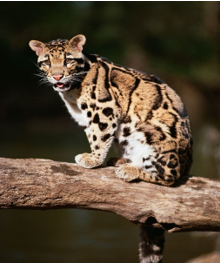
• Unique Features:
• Ecological Importance: An important forest predator and indicator species whose conservation helps protect tropical and subtropical forest ecosystems and their associated biodiversity.
• Conservation Status (Mainland Clouded Leopard):
• Major Threats: Habitat loss and fragmentation, snaring and poaching, illegal wildlife trade, prey depletion and other human-induced disturbances.
Khan Global Studies App
With our training programs, learning online can be a very exciting experience. Take the next step toward achieving your professional and personal objectives.



Course Related Query:
Ask Your DoubtsStore Related Query:[email protected]NEET | JEE | CUET
NCERT Books
Resources
We love learning. Through our innovative solutions, we encourage ourselves, our teams, and our Students to grow. We welcome and look for diverse perspectives and opinions because they enhance our decisions. We strive to understand the big picture and how we contribute to the company’s objectives. We approach challenges with optimism and harness the power of teamwork to accomplish our goals. These aren’t just pretty words to post on the office wall. This is who we are. It’s how we work. And it’s how we approach every interaction with each other and our Students.
Come with an open mind, hungry to learn, and you’ll experience unmatched personal and professional growth, a world of different backgrounds and perspectives, and the freedom to be you—every day. We strive to build and sustain diverse teams and foster a culture of belonging. Creating an inclusive environment where every students feels welcome, appreciated, and heard gives us something to feel (really) good about.