Explore All Exams at KGS


All Exams
Explore All Exams at KGS

Khan Sir Courses
Geography I Polity I History | World Map I Indian Map I Economics I Biology

UPSC & State PSC
UPSC I BPSC I UP-PSC I MP-PSC

State Exams
UP I Bihar I MP | Rajasthan

NEET | JEE | CUET
NEET | JEE | CUET

Defence Exams
NDA I CDS I CAPF I AFCAT I SSB I Agniveer

Police Exams
UP SI | Bihar SI | Delhi Police | UP Constable

SSC Exams
CGL I CPO I CHSL I MTS I SSC GD I Delhi Police

Foundation Courses
Physics I Chemistry I Biology I History I Geography I Polity I NCERT I Math I English | Map I Reasoning

Railway Exams
RRB | RPF

Teaching Exams
TET | Teaching | UGC

Banking Exams
SBI | RBI | IBPS

Engineering Exams
Civil | Electrical | Mechanical
UGC NET
UGC NET/JRF
Current Affairs provides you with the best compilation of the Daily Current Affairs taking place across the globe: National, International, Sports, Science and Technology, Banking, Economy, Agreement, Appointments, Ranks, and Report and General Studies
Current Affairs
Context: On Wednesday, the Bihar Cabinet, chaired by Chief Minister Samrat Choudhary, approved 11 proposals focused on rooftop solar, skill development, higher education, waste-to-energy and power-sector capacity expansion.
About the news
● PM Surya Ghar State Subsidy
● Student Credit Card Extended
● Kushal Yuva Programme
● Private ITI Admissions
● B.Ed. Colleges to Become Multidisciplinary Institutions
● Compressed Biogas Plants
Significance of the Bihar Cabinet Decisions
● Promotes rooftop solar: Additional State subsidy can reduce upfront costs and electricity bills.
● Improves education access: Extending Bihar Student Credit Card Scheme supports higher and professional education.
● Boosts employability: Kushal Yuva Programme and merit-based ITI admissions strengthen vocational skills.
● Supports circular economy: CBG plants can convert organic waste into clean fuel and bio-manure.
● Encourages planned urbanisation: Greenfield satellite townships can attract investment and organised development.
● Integrated development: Combines education, skills, clean energy, waste management and power infrastructure.
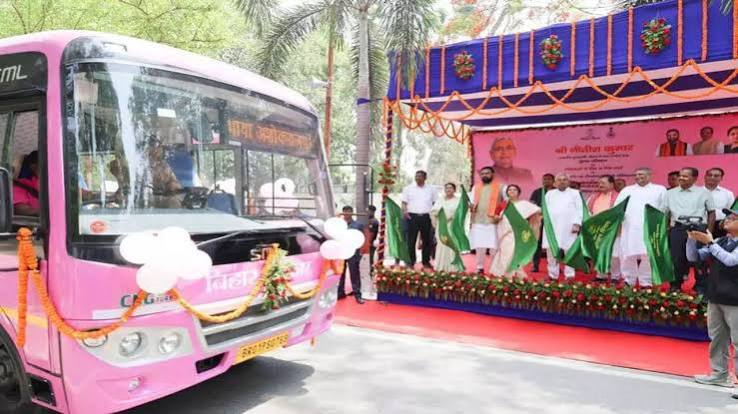
Pink Bus Service Makes Women Passengers Feel Safer in Bihar
Context: A survey of women passengers using Bihar’s Pink Bus Service in Patna, Muzaffarpur and Gaya found that 56% of respondents felt safer while travelling on these buses.
Key Findings
● The study was reportedly conducted after three months of Pink Bus operations to assess women’s travel experience and service-management arrangements.
● 56% of women respondents stated that the Pink Bus made them feel safer during travel.
● 60% said they had begun travelling alone more often after the service was introduced.
● 42% of passengers were students travelling to schools, colleges or coaching centres.
● 36% used Pink Buses to travel to railway stations or workplaces.
● 27% used the service for hospitals, health centres and markets.
Significance
● Women’s Mobility: Safer transport enables women to access education, jobs and healthcare independently.
● Employment: Reliable mobility can increase female labour-force participation.
● Education: Helps girls travel safely to schools, colleges and coaching centres.
● Gender-Responsive Governance: Promotes infrastructure designed around women’s safety needs.
● Digital Governance: GPS, panic buttons and real-time tracking improve safety, accountability and emergency response.
Kaziranga Under Threat: Illegal Riverbed Mining Reaches NGT
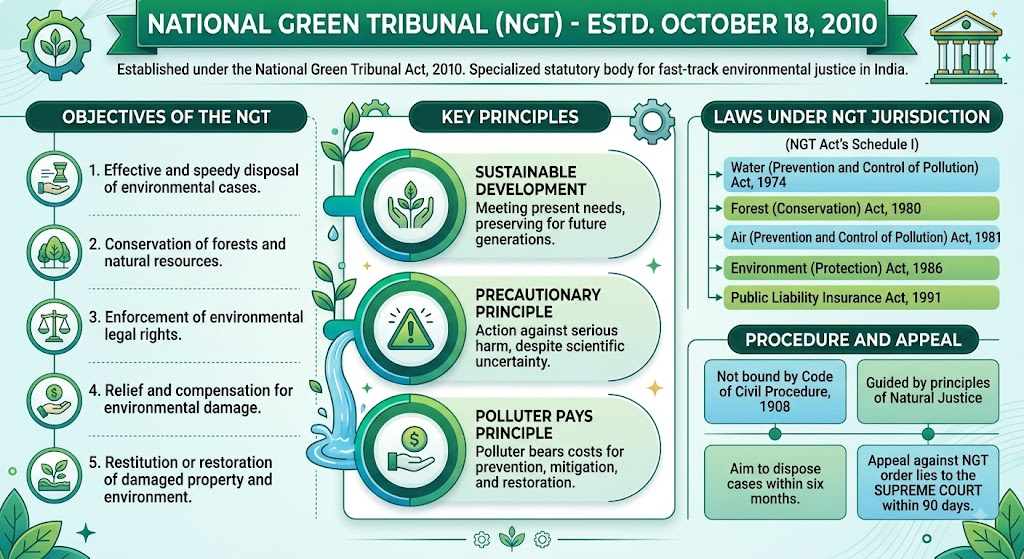
Context: A petition has been filed before the National Green Tribunal (NGT) alleging large-scale mechanised sand mining in the Deihori River near Kaziranga National Park and Tiger Reserve in Assam’s Karbi Anglong district.
About the news
● In April 2019, the Supreme Court imposed an immediate ban on mining and related activities along the southern boundary of Kaziranga National Park and Tiger Reserve and across the catchment areas of rivers and streams originating in the Karbi Anglong Hills and flowing into Kaziranga.
● Kaziranga is a UNESCO World Heritage Site in Assam’s Brahmaputra floodplain, globally renowned as the largest stronghold of the greater one-horned rhinoceros.
Kaziranga National Park
● State: Assam
● Districts: Mainly Golaghat and Nagaon; expansion areas include Sonitpur, Biswanath and Karbi Anglong.
● Located in the Brahmaputra floodplain, between the Brahmaputra River and Karbi Anglong Hills.
● National Park: Declared in 1974.
● Tiger Reserve: Declared in 2006.
● UNESCO World Heritage Site: Inscribed in 1985.
● Major River: Brahmaputra; Mora Diphlu broadly forms part of the southern boundary.
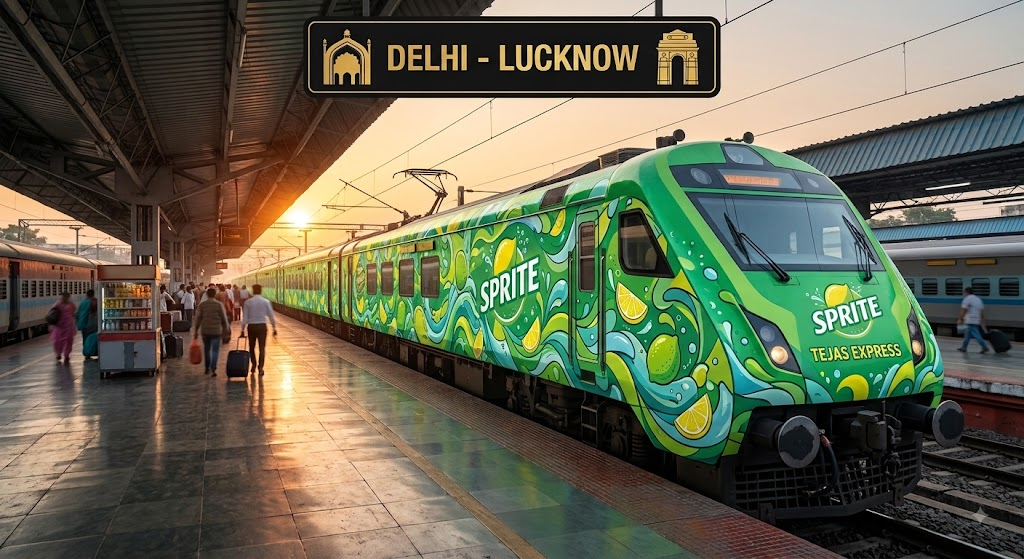
India’s First Branded Train: Sprite Tejas Express
Context: The IRCTC-operated Lucknow–Delhi–Lucknow Tejas Express is set to run as the “Sprite Tejas Express” for six months after Indian Railways awarded train-branding rights to Sprite.
About the news
● Train branding refers to licensing the commercial right to place a company’s name, logos and advertisements on a train’s exterior and/or interior. It is a form of non-fare revenue for Indian Railways.
● The train remains an IRCTC-owned and operated private train; only the naming and advertising rights are licensed. It does not transfer ownership of railway infrastructure or rolling stock to the brand.
● It is being described as the first instance of an Indian train being named after a private brand under a commercial branding arrangement.
Khan Global Studies App
With our training programs, learning online can be a very exciting experience. Take the next step toward achieving your professional and personal objectives.


Course Related Query:
Ask Your DoubtsStore Related Query:[email protected]NEET | JEE | CUET
NCERT Books
Resources
We love learning. Through our innovative solutions, we encourage ourselves, our teams, and our Students to grow. We welcome and look for diverse perspectives and opinions because they enhance our decisions. We strive to understand the big picture and how we contribute to the company’s objectives. We approach challenges with optimism and harness the power of teamwork to accomplish our goals. These aren’t just pretty words to post on the office wall. This is who we are. It’s how we work. And it’s how we approach every interaction with each other and our Students.
Come with an open mind, hungry to learn, and you’ll experience unmatched personal and professional growth, a world of different backgrounds and perspectives, and the freedom to be you—every day. We strive to build and sustain diverse teams and foster a culture of belonging. Creating an inclusive environment where every students feels welcome, appreciated, and heard gives us something to feel (really) good about.