KGS

All Exams

Explore All Exams at KGS

All Exams
Home>Current Affairs>Sarnath Inscribed on the UNESCO World Heritage List
Current Affairs made simple.

Current Affairs provides you with the best compilation of the Daily Current Affairs taking place across the globe: National, International, Sports, Science and Technology, Banking, Economy, Agreement, Appointments, Ranks, and Report and General Studies

banner-image

Current Affairs

Sarnath Inscribed on the UNESCO World Heritage List

SYLLABUS

Paper I Prelims: Current events of national and international importance.

Context: The Ancient Buddhist Site of Sarnath in Uttar Pradesh has been inscribed on the UNESCO World Heritage List during the 48th Session of the World Heritage Committee held in Busan, South Korea, becoming India's 45th World Heritage Property.

More on the News

  • The site has been inscribed under UNESCO Criteria (iii) and (vi) for its exceptional testimony to Buddhist tradition and its direct association with Lord Buddha's first sermon (Dharmachakra Pravartana) and the establishment of the Buddhist Sangha.
  • It was included in UNESCO's Tentative List in 1998.
  • With this inscription:
    • India now has 45 UNESCO World Heritage Sites, ranking 6th globally and 2nd in the Asia-Pacific region.
    • India also has 69 properties on UNESCO's Tentative List.
    • Sarnath is Uttar Pradesh's fourth UNESCO World Heritage Site.
  • The recognition is expected to strengthen India's Buddhist heritage, cultural diplomacy and sustainable heritage tourism, particularly the Buddhist Circuit.

About Sarnath

  • Location: Situated near Varanasi, Uttar Pradesh.
  • Ancient Names: Known as Rishipatana (Isipatana/Ishipatana) and Mrigadava (Deer Park) in Buddhist tradition.
  • Religious Significance
    • Lord Buddha visited Sarnath after attaining enlightenment at Bodh Gaya.
    • He delivered his first sermon (Dharmachakra Pravartana/Turning of the Wheel of the Law) here.
    • The event marked the establishment of the Buddhist Sangha and the beginning of the propagation of the Noble Eightfold Path.
    • Buddha himself identified Sarnath as one of the four principal Buddhist pilgrimage sites.
  • The serial property comprises two component parts:
  • Chaukhandi Stupa, and
  • Archaeological Remains of Sarnath, comprising the Dhamekh Stupa, Dharmarajika Stupa, Mulagandhakuti Vihara, Ashokan Pillar, along with other monasteries, stupas, and archaeological remains.
  • Historical Development:
    • Developed through royal, monastic and lay patronage from the Pre-Mauryan period (5th–4th century BCE)until its destruction in the 12th century CE.
    • It was rediscovered in the 18th century after centuries of decline.
  • Archaeological Importance:
    • One of the most extensively excavated sites by the Archaeological Survey of India (ASI).
    • Preserves a continuous archaeological sequence spanning about 16 centuries (5th–4th century BCE to 12th century CE).
    • Excavations led to the discovery of:
      • Ashokan Lion Capital, later adopted as the National Emblem of India.
      • Dharmachakrapravartana Buddha of the Classical Gupta period.
    • These artefacts are preserved in India's earliest Site Museum, established in 1904.

About UNESCO World Heritage Sites

  • A UNESCO World Heritage Site is a cultural, natural or mixed property recognised for its Outstanding Universal Value (OUV).
  • The objective is to preserve and promote heritage of exceptional importance to humanity under the World Heritage Convention, 1972.
  • UNESCO was established in 1945, and India has been a UNESCO Member State since 1946.
  • World Heritage properties are classified into:
    • Cultural Heritage
    • Natural Heritage
    • Mixed Heritage
  • To be inscribed, a property must possess Outstanding Universal Value and satisfy at least one of the ten UNESCO selection criteria.
  • Sarnath was inscribed under:
    • Criterion (iii): Bears exceptional testimony to the Buddhist cultural tradition through its long-standing role as one of the foremost centres of Buddhist pilgrimage.
    • Criterion (vi): Directly associated with Lord Buddha's first sermon and the meeting with his first disciples, events of outstanding universal significance.
  • Nomination Process:
    • A property must first be included in the Tentative List.
    • Each State Party can nominate only one site annually for inscription.
    • In India, the Archaeological Survey of India (ASI)is the nodal agency for all World Heritage matters.

Khan Global Studies App

The most trusted learning platform on your phone

With our training programs, learning online can be a very exciting experience. Take the next step toward achieving your professional and personal objectives.


Download on the App StoreGet it on Google Play
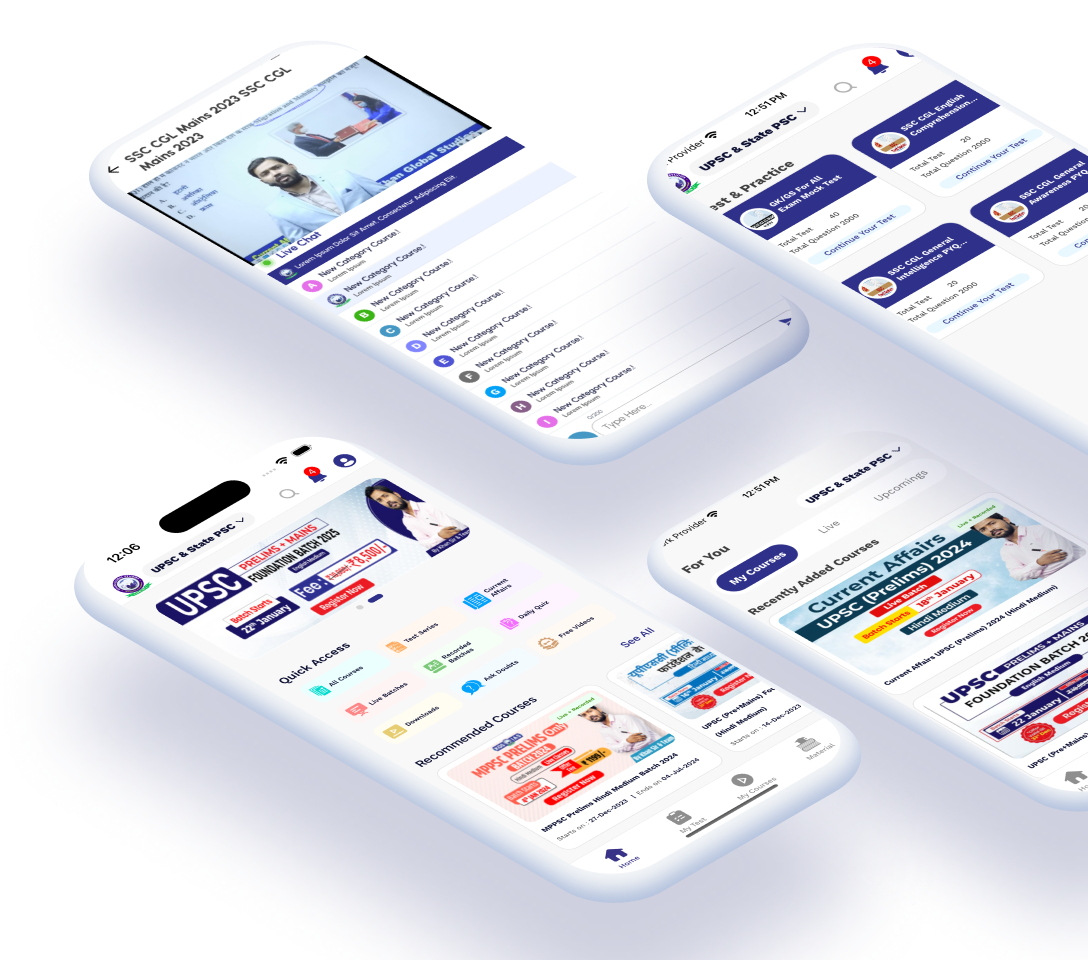
Khan Global Studies mobile app screens
logo
Khan Global Studies Pvt. Ltd. 5th Floor,
A13A, Graphix 1 Tower B, Sector 62,
Noida, Uttar Pradesh 201309

Course Related Query:

Ask Your DoubtsStore Related Query:[email protected]

Get Free Academic Counseling & Course Details

KGS best learning platform

About Khan Global Studies

We love learning. Through our innovative solutions, we encourage ourselves, our teams, and our Students to grow. We welcome and look for diverse perspectives and opinions because they enhance our decisions. We strive to understand the big picture and how we contribute to the company’s objectives. We approach challenges with optimism and harness the power of teamwork to accomplish our goals. These aren’t just pretty words to post on the office wall. This is who we are. It’s how we work. And it’s how we approach every interaction with each other and our Students.


What Makes Us Different

Come with an open mind, hungry to learn, and you’ll experience unmatched personal and professional growth, a world of different backgrounds and perspectives, and the freedom to be you—every day. We strive to build and sustain diverse teams and foster a culture of belonging. Creating an inclusive environment where every students feels welcome, appreciated, and heard gives us something to feel (really) good about.

©Copyright 2026 KhanGlobalStudies