Explore All Exams at KGS


All Exams
Explore All Exams at KGS

Khan Sir Courses
Geography I Polity I History | World Map I Indian Map I Economics I Biology

UPSC & State PSC
UPSC I BPSC I UP-PSC I MP-PSC

State Exams
UP I Bihar I MP | Rajasthan

NEET | JEE | CUET
NEET | JEE | CUET

Defence Exams
NDA I CDS I CAPF I AFCAT I SSB I Agniveer

Police Exams
UP SI | Bihar SI | Delhi Police | UP Constable

SSC Exams
CGL I CPO I CHSL I MTS I SSC GD I Delhi Police

Foundation Courses
Physics I Chemistry I Biology I History I Geography I Polity I NCERT I Math I English | Map I Reasoning

Railway Exams
RRB | RPF

Teaching Exams
TET | Teaching | UGC

Banking Exams
SBI | RBI | IBPS

Engineering Exams
Civil | Electrical | Mechanical
UGC NET
UGC NET/JRF
Current Affairs provides you with the best compilation of the Daily Current Affairs taking place across the globe: National, International, Sports, Science and Technology, Banking, Economy, Agreement, Appointments, Ranks, and Report and General Studies
Current Affairs
Birth Anniversary of Lokmanya Bal Gangadhar Tilak
Context: Prime Minister paid tributes to Lokmanya Bal Gangadhar Tilak on his birth anniversary (23 July), remembering his immense contribution to India's freedom struggle and the spread of nationalist consciousness.
About Lokmanya Bal Gangadhar Tilak
• Early Life and Education: Bal Gangadhar Tilak was born on 23 July 1856 at Ratnagiri (present-day Maharashtra) into a middle-class Chitpavan Brahmin family.
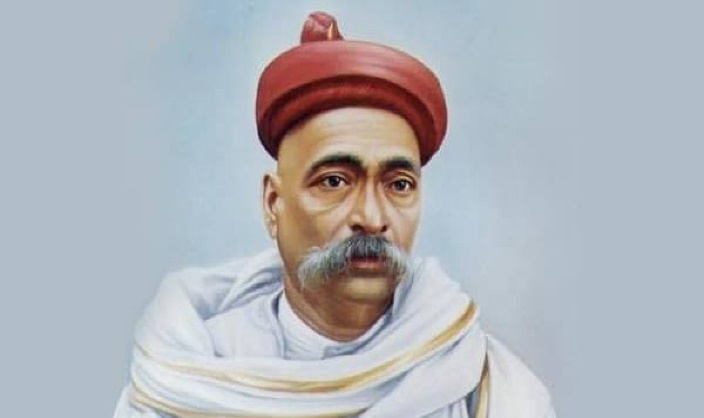
• Role in India's National Movement: Tilak was one of the foremost leaders of the early nationalist movement and is popularly known as "Lokmanya" (Beloved Leader of the People).
• Legacy: Tilak is regarded as one of the founding architects of India's freedom movement and helped transform nationalism into a mass political movement.
Birth Anniversary of Chandra Shekhar Azad
Context: Prime Minister paid homage to Chandra Shekhar Azad on his birth anniversary (23 July), describing him as a symbol of fearless courage and unwavering patriotism whose sacrifice continues to inspire generations.
About Chandra Shekhar Azad
• Born on 23 July 1906 at Bhabhra (now Chandra Shekhar Azad Nagar) in present-day Madhya Pradesh, he spent his childhood in the Bhil region, where he developed exceptional archery and marksmanship skills.
• As a teenager, he participated in Mahatma Gandhi's Non-Cooperation Movement (1921). Following his arrest, he declared his name as "Azad", his father's name as "Swatantrata", and his residence as "Jail", earning the name by which he is remembered.
• He joined the Hindustan Republican Association (HRA) and, after the Kakori Train Action (1925), emerged as one of its principal leaders. In 1928, he, along with Bhagat Singh and other revolutionaries, reorganised the HRA into the Hindustan Socialist Republican Association (HSRA), incorporating socialist ideals into its objectives.
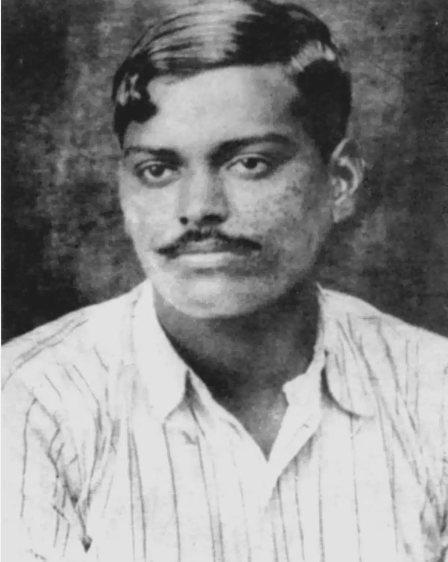
• Azad participated in the revolutionary campaign following the death of Lala Lajpat Rai, including the assassination of J.P. Saunders (1928), and played an important organisational role in HSRA activities while remaining underground.
• On 27 February 1931, he was surrounded by British police at Alfred Park (now Chandra Shekhar Azad Park) in Allahabad. Staying true to his pledge that he would never be captured alive, he used his last bullet on himself after a prolonged gunfight.
• Legacy: Remembered as one of the foremost revolutionaries of India's freedom struggle, Chandra Shekhar Azad inspired generations through his courage, organisational leadership and unwavering commitment to complete independence from British rule.
First Indigenous Expendable Turbo Jet Engine
Context: India has successfully developed its first indigenous Expendable Turbo Jet Engine in the 350 kg thrust class, marking a major milestone in indigenous aerospace propulsion technology and defence manufacturing.
About the First Indigenous Expendable Turbo Jet Engine
• The engine has been designed by the Defence Research and Development Organisation (DRDO) through its Gas Turbine Research Establishment (GTRE).
• It is India's first indigenous Expendable Turbo Jet Engine in the 350 kg thrust class.
• GTRE selected Azad Engineering, Hyderabad, as its industry partner for the manufacturing and assembly of the engine, highlighting the growing role of the private sector in India's defence ecosystem.
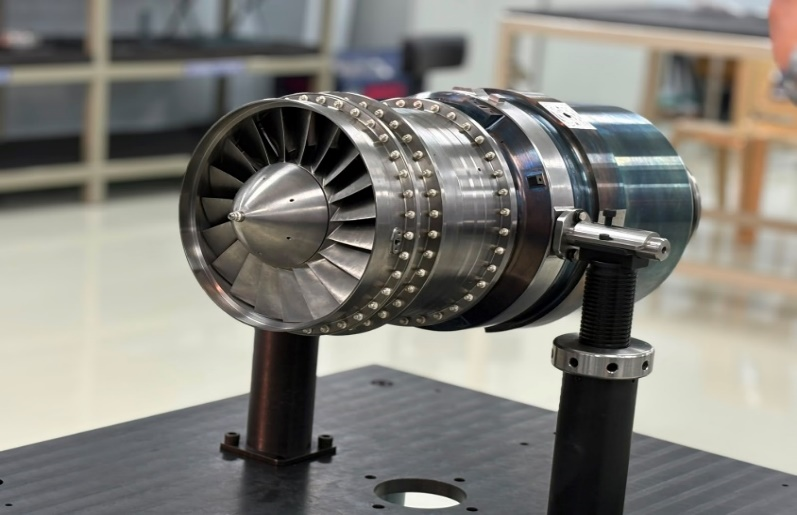
• The engine was successfully realised and delivered by Azad Engineering to GTRE, marking the culmination of years of precision engineering, advanced manufacturing and close collaboration between India's scientific and industrial communities.
• Jet engine technology is regarded as one of the world's most sophisticated engineering disciplines, requiring exceptional precision, advanced metallurgy, specialised materials and uncompromising manufacturing standards.
• The successful development of the engine reflects India's growing capability to design and manufacture advanced propulsion systems,
Kusha Long-Range Surface-to-Air Missile
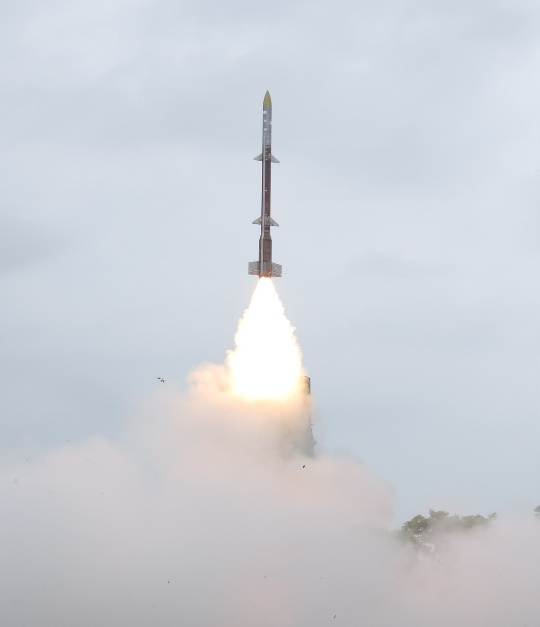
Context: The Defence Research and Development Organisation (DRDO) successfully conducted the maiden flight-test of the indigenous Kusha Long-Range Surface-to-Air Missile (LRSAM) from Dr APJ Abdul Kalam Island off the coast of Odisha.
About the Kusha Long-Range Surface-to-Air Missile
• Developed by: Defence Research and Development Organisation (DRDO) under Project Kusha, also referred to as the Extended Range Air Defence System (ERADS).
• Target Intercepted: Successfully engaged an electronic target simulating a high-speed, high-altitude aerial threat, with all mission objectives achieved.
• Capability: Designed to neutralise a wide variety of aerial threats, including fighter aircraft, cruise missiles, unmanned aerial vehicles (UAVs) and large enemy aircraft over a wide range and altitude envelope.
• Indigenous System: All major components, including interceptor missiles, radars, launchers, and the command-and-control system, have been developed by DRDO laboratories in partnership with Indian industry.
• Interceptor Variants: Planned in three versions—M1 (150 km), M2 (250 km) and M3 (350–400 km).
Significance
• Marks India's entry into the elite group of nations capable of indigenously designing, developing and deploying long-range, multi-tiered air defence systems.
• Will serve as a key component of India's proposed 'Sudarshan Chakra' air defence umbrella, intended to establish a sovereign, multi-layered air defence shield.
• Complements the S-400 Triumf system by filling the capability gap between the Medium Range Surface-to-Air Missile (MRSAM) and the S-400, rather than replacing it.
• Reduces dependence on imported long-range air defence systems and strengthens Aatmanirbhar Bharat in defence manufacturing.
• Enhances India's capability to counter fighter aircraft, cruise missiles, UAVs and future high-speed aerial threats, significantly strengthening national air defence.
NSE's Nifty500 Ahimsa Index
Context: NSE Indices Ltd., a subsidiary of the National Stock Exchange (NSE), has launched the Nifty500 Ahimsa Index, India's first stock market index focused on animal-welfare-based ethical investing.
About the Index
• The index has been developed in collaboration with the Ahimsagain Foundation under its Ahimsa Investment Movement (AIM), which promotes the integration of animal welfare into investment decisions.
• It seeks to provide investors with exposure to companies whose business practices align with the principle of Ahimsa (non-violence) while promoting responsible investing.
• It selects companies from the Nifty 500 universe using a proprietary screening framework based on publicly available information, evaluating their products, services and business practices. Companies are classified into Green, Orange and Red categories, with only Green-category companies eligible for inclusion.
• The index currently comprises 326 companies, weighted by free-float market capitalisation, with an individual stock weight capped at 5%. It is reconstituted and rebalanced semi-annually, and has a base date of 1 April 2016 and a base value of 1,000.
• It is designed to serve as a benchmark for passive investment products, including Exchange-Traded Funds (ETFs), index funds and other structured investment products, while maintaining diversified exposure to the equity market.
Significance
• The index extends the Environmental, Social and Governance (ESG) investing framework by explicitly incorporating animal welfare into investment decisions, thereby promoting ethical and values-based investing.
• It reflects the growing demand for responsible investment products and strengthens India's portfolio of thematic indices catering to evolving investor preferences.
Exam Nugget
• BSE Saatvik Index: Introduced earlier by the Bombay Stock Exchange (BSE), it tracks companies aligned with Saatvik (vegetarian-friendly) principles.
• In comparison, the Nifty500 Ahimsa Index adopts a broader animal-welfare-based screening framework, making it India's first stock market index specifically focused on animal welfare.
Operation Southern Readiness 26-2
Context: The Indian Navy successfully concluded Operation Southern Readiness 26-2, a four-day multinational maritime security training engagement, at the Southern Naval Command (SNC), Kochi, from 20–23 July 2026.
Key Highlights
• The exercise was conducted in partnership with the Combined Maritime Forces (CMF) under the aegis of Southern Naval Command and the Indian Navy-led Combined Task Force (CTF) 154.
• The exercise brought together 276 personnel from 27 CMF partner nations, supported by 76 facilitators and Subject Matter Experts (SMEs), along with representatives from four international organisations.
• It showcased the Indian Navy's modern training infrastructure, advanced simulators and instructional expertise, reinforcing Southern Naval Command's role as a leading maritime training hub.
About Combined Task Force (CTF) 154
• CTF 154 is the dedicated Training Task Force of the Combined Maritime Forces (CMF), a multinational maritime partnership comprising more than 40 nations.
• It focuses on enhancing the capacity, interoperability and professional readiness of CMF partner nations through multinational maritime training.
• The Indian Navy currently commands CTF 154, reinforcing India's role as the Preferred Security and Training Partner in the Indian Ocean Region and its commitment to regional maritime capacity-building.
Khan Global Studies App
With our training programs, learning online can be a very exciting experience. Take the next step toward achieving your professional and personal objectives.



Course Related Query:
Ask Your DoubtsStore Related Query:[email protected]NEET | JEE | CUET
NCERT Books
Resources
We love learning. Through our innovative solutions, we encourage ourselves, our teams, and our Students to grow. We welcome and look for diverse perspectives and opinions because they enhance our decisions. We strive to understand the big picture and how we contribute to the company’s objectives. We approach challenges with optimism and harness the power of teamwork to accomplish our goals. These aren’t just pretty words to post on the office wall. This is who we are. It’s how we work. And it’s how we approach every interaction with each other and our Students.
Come with an open mind, hungry to learn, and you’ll experience unmatched personal and professional growth, a world of different backgrounds and perspectives, and the freedom to be you—every day. We strive to build and sustain diverse teams and foster a culture of belonging. Creating an inclusive environment where every students feels welcome, appreciated, and heard gives us something to feel (really) good about.